AI
Ouroboros at the Edge: HOTL Proven in a 7‑Hour Ralphthon
We pushed a harness to the limit — 100k lines of code, 70k tests, and external dependencies — and it still converged.
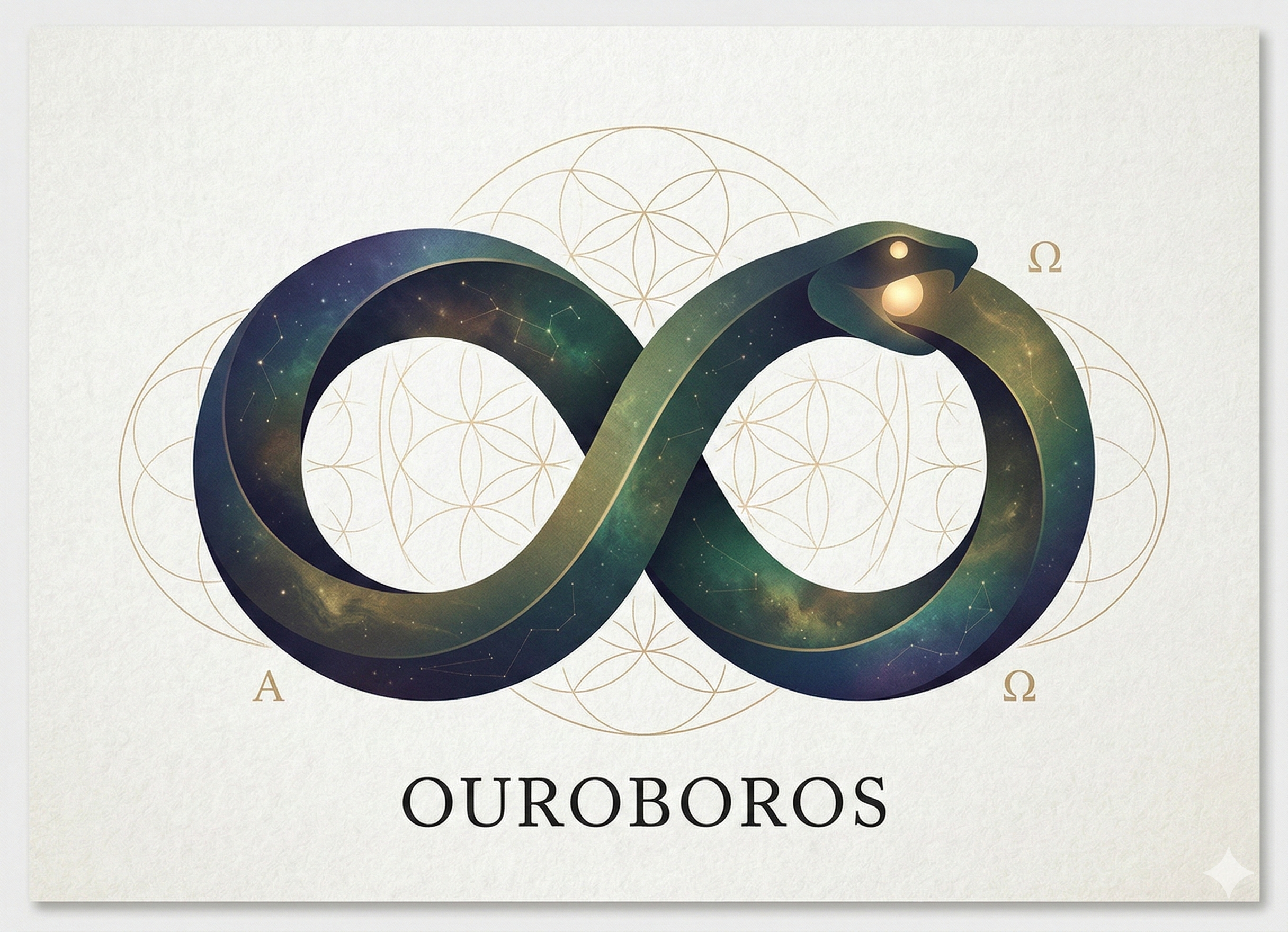
🤔 Curiosity: The Question
I’ve been building my harness Ouroboros for a while, dog‑fooding it in safe conditions.
But at this year’s Ralphthon, I wanted to test it at the edge.
Two hypotheses:
1) Practicality — Does Ouroboros hold up when I let it run all night?
2) External dependency control — Can Ralph still ship with hardware + services (camera, Discord) and zero human intervention?
Result: our team 사이좋은부부 took 1st place and proved HOTL → Human Outside the Loop is real.
📚 Retrieve: The Knowledge
1) 7 hours → 100k LOC → 70k tests
Ralphthon rules were brutal:
- First 4 hours: humans can shape harness + specs
- After that: hands off the keyboard
While we slept, Ralph + Ouroboros generated 100k+ LOC, and 70k+ were tests.
Not just unit tests — mocked external cameras + Discord APIs to verify real hardware interactions.
By morning:
- Camera watched the kitchen and rejected measurements when humans were present
- Discord bot alerted cleaning needs
- The loop evolved without us touching a key
2) Harness design = survival skill
We’ve crossed from HITL to HOTL.
That means coding skill is no longer enough — harness design is the leverage point.
Ralph loops are powerful but dangerous:
- Bad DoD → infinite loops
- Mis‑specified end conditions → runaway cost (and polar bear tears 🐻❄️)
So I defined DoD as evolutionary convergence, not just “time spent.”
3) Ralph loop convergence logic
Ralph runs until ontology similarity stabilizes.
Similarity formula:
[ \text{Similarity} = 0.5 \cdot \text{name_overlap} + 0.3 \cdot \text{type_match} + 0.2 \cdot \text{exact_match} ]
Convergence rule: stop when Similarity ≥ 0.95.
We also detect pathological cases:
- Stagnation: no changes for 3 generations
- Oscillation: Gen N = Gen N‑2
- Repetitive feedback: >70% repeated questions
- Wonder loop: same curiosity never resolves
flowchart LR
  A[Gen 1] --> B[Gen 2]
  B --> C[Gen 3]
  C --> D{Similarity ≥ 0.95?}
  D -->|Yes| E[CONVERGED]
  D -->|No| A
4) Socratic + Double Diamond = Ouroboros
Ouroboros applies Socratic reasoning to remove ambiguity:
[ \text{Ambiguity} = 1 - \sum(clarity_i \cdot weight_i) ]
The “serpent loop” is:
Interview → Seed → Execute → Evaluate → Evolve
This is grounded in the Double Diamond (Wonder → Ontology → Design → Evaluation).
The philosophy is old — but now it compiles.
💡 Innovation: The Insight
What I proved
- HOTL is viable when the harness defines convergence
- External dependencies can be automated if you spec the ontology
- Failure isn’t model weakness — it’s ambiguity leakage
Practical implications
| Insight | Implication | Next Step |
|---|---|---|
| DoD must be mathematical | Stops infinite loops | Bake similarity gates |
| Ontology = shared meaning | Prevents drift across generations | Formalize specs early |
| External deps are testable | Mocks + eval gates scale | Standardize hardware adapters |
New Questions This Raises
- Can convergence thresholds adapt per task domain?
- What’s the lowest‑cost loop that still yields stable ontology?
- How do we visualize “ontology drift” in real time?
References
- Ouroboros GitHub: https://github.com/Q00/ouroboros
- PyPI: https://pypi.org/project/ouroboros-ai/