Portfolio
The visual portfolio is the gallery; this page is the evidence map. Each thread connects the problem, what I built, and evidence readers can inspect. Private data and unpublished work are clearly separated from public evidence.
Evidence boundary. Shipped internal systems, public repositories, and published technical analysis are different evidence types.
Project map
| Project thread | Problem, contribution, and evidence |
|---|---|
| AI products & RAG | Problem: Make private studio knowledge searchable, grounded, and operable. Built: Retrieval pipelines, agent workflows, product surfaces, and operational controls. Evidence: Project details, retrieval writing, and the visual portfolio. |
| Agent harness | Problem: Help tool-using agents finish bounded work without hiding failure. Built: Execution loops, edit integrity, critic gates, reusable skills, and verification contracts. Evidence: Public repositories and agent writing. |
| Multimodal QA | Problem: Turn gameplay screenshots and video into reviewable QA signals. Built: CV, OCR, detection, VLM interpretation, and report workflows. Evidence: Research details and multimodal writing. |
| Game AI & automation | Problem: Make game evaluation and production workflows reproducible. Built: Simulation agents, procedural systems, Unity tooling, and agent-driven builds. Evidence: Project details and playable projects below. |
AI products: retrieval in real workflows
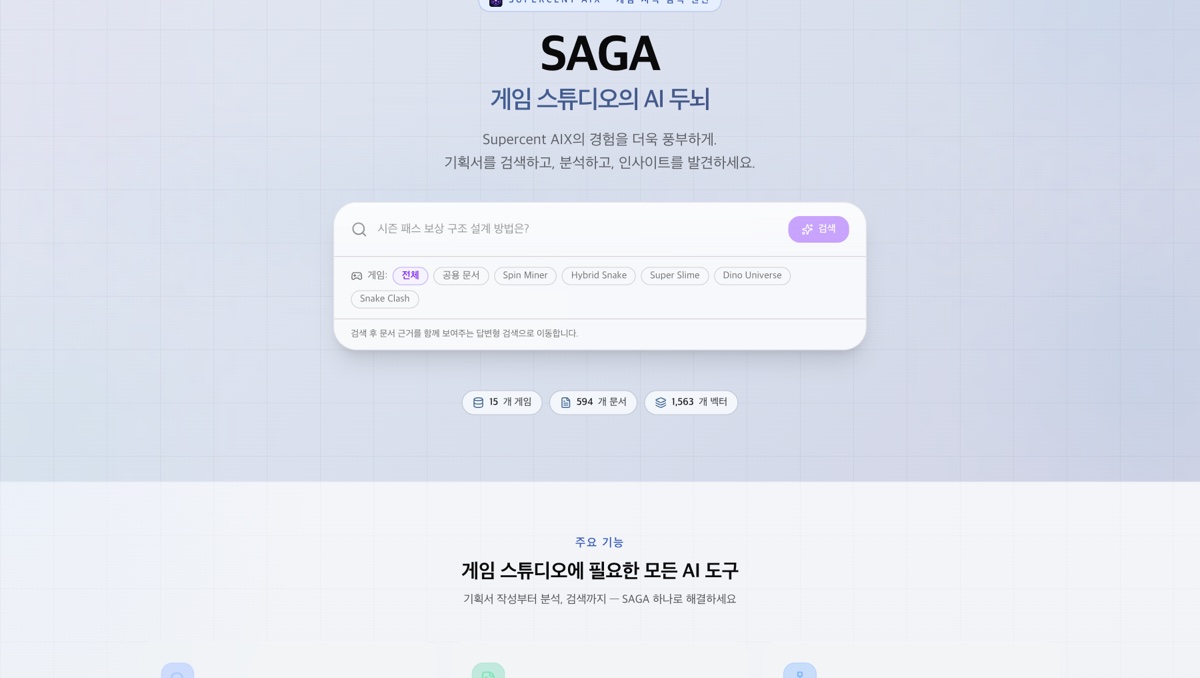 SAGA connects retrieval quality to a product surface that a game studio can actually operate.
At Supercent, I built AI products where retrieval was only the middle of the system. SAGA indexes 594 game-design documents and 1,563 vectors across 15 games, combining RAG-Fusion, CRAG, hybrid search, cross-encoder reranking, and a grounding-oriented generation pattern. Millie extends that direction into per-user knowledge operations and a Slack-driven local-agent system. Brain focuses on citation-first knowledge operations with incremental ingestion and connected editing workflows.
The portfolio shows these as shipped products. The related writing explains the reusable engineering questions:
- LLM2Vec, Two Years On checks an embedding paper’s SOTA claim against its own leaderboard placement and two years of download data.
- One Memory Setup, Every Harness reads a memory bridge at the seam where retrieval becomes shared agent state.
The practical lesson is that retrieval quality, permissions, observability, and user experience cannot be reviewed independently. A good answer is not enough if nobody can trace its source, correct the knowledge, or understand why the system chose a tool.
Agent tooling: verification is part of the product
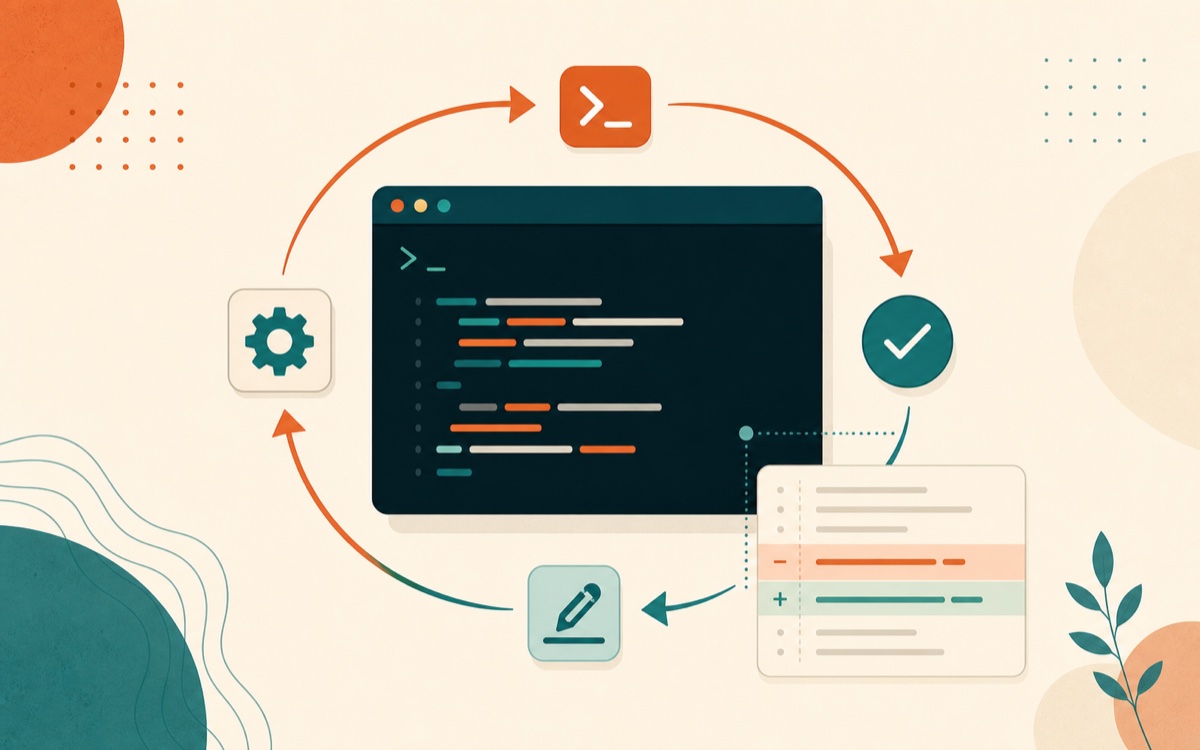 jeo-code is one part of a public tool family built around bounded execution and verification.
My open-source agent work is public enough to inspect directly:
- jeo-code is a Bun-based coding-agent harness with a multi-provider tool loop, anchored-edit integrity, and a verify-before-done contract.
- jeopi explores a critic-gated plan, execute, and verify spine.
- jeo-skills packages reusable workflows across agent runtimes.
- oh-my-jeo provides a spec-first workflow layer around chat agents.
- jeo-claw connects Discord commands to bounded repository work.
The associated articles are not release announcements. They document design pressure and failure boundaries:
- jeo-code Puts Skills and Approval Gates Around Coding Agents
- DeepSeek Harness: What If the Agent Loop Itself Were Just Another Plugin?
I treat agent orchestration as earned complexity. One capable agent with clear tools and a visible completion contract is usually better than a large cast of agents with vague authority.
Multimodal QA: evidence, not verdict
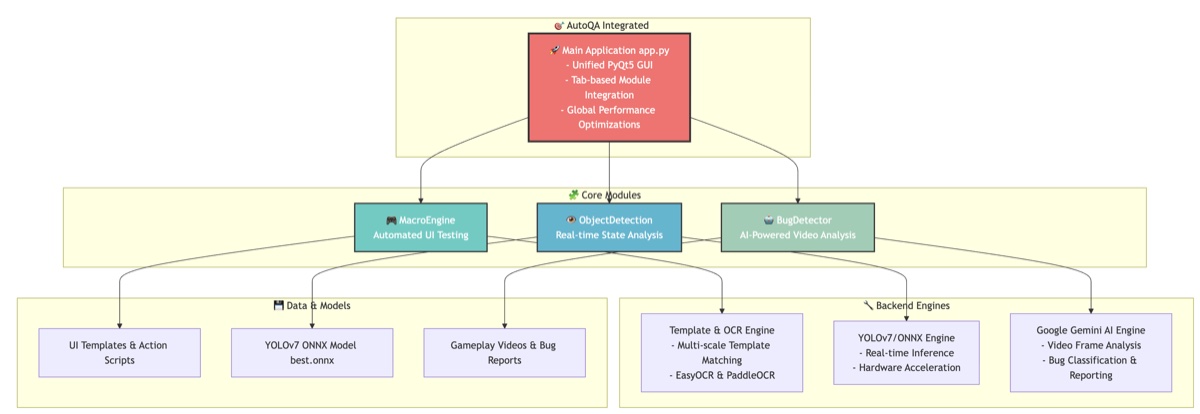 AutoQA work combines classical vision, learned detectors, and language-based reporting rather than assuming one model can own the whole verdict.
My graduate research and personal tooling connect image-based QA, OCR, multi-scale template matching, fine-tuned detection models, video context, and VLM-assisted bug reporting. The interesting problem is not whether a model can describe a frame. It is whether a team can turn visual observations into a reproducible QA workflow with known false negatives and reviewable evidence.
This thread includes an IEEE RAAI 2024 poster on image-based game QA automation and a 2025 publication on automated QA reporting from natural-language captions. The multimodal, video and game AI section of Start Here provides the wider technical context behind that work.
Internal data and unpublished research artifacts are not public evidence. Where I cannot share a dataset, customer document, or source repository, I state the boundary instead of replacing it with a stronger claim.
Game AI and automation: repeatable production
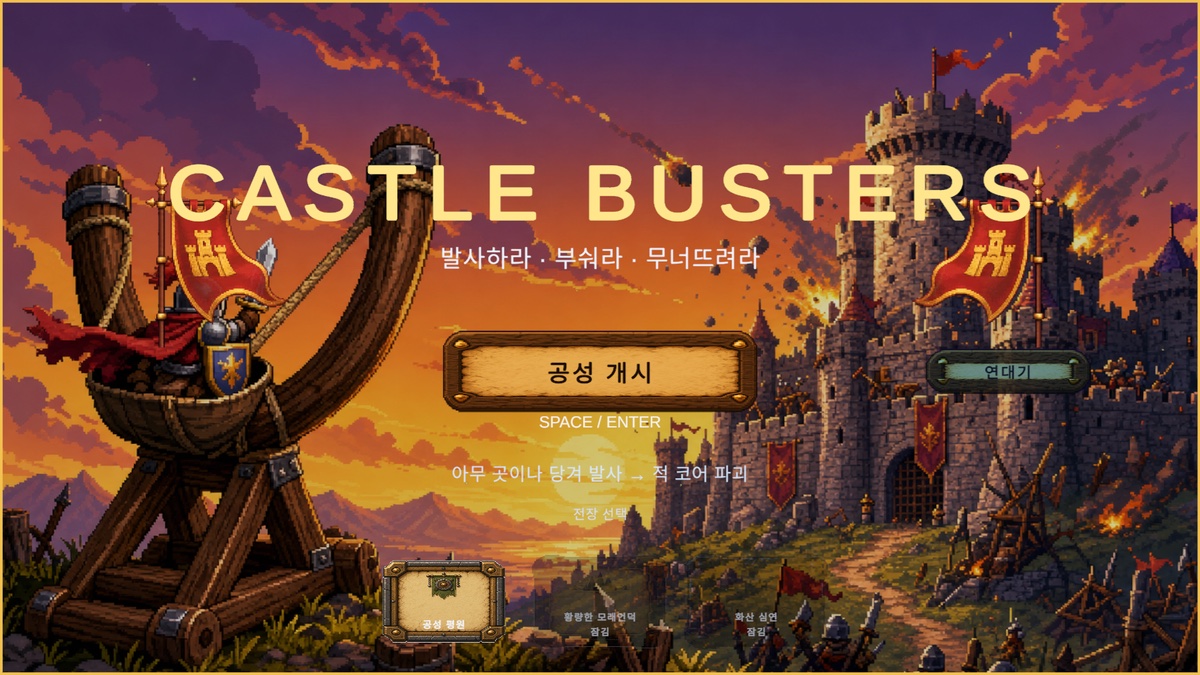 Castle War is a playable project, but the main experiment was the coding-agent-driven production workflow behind it.
At NCSOFT and Com2uS, I worked on simulation-based difficulty evaluation, cellular-automata and GAN-based generation, reinforcement-learning prototypes, Unity-to-Python systems, and internal production tools. That experience shaped a simple bias: an AI feature is unfinished until the surrounding workflow is measurable and reproducible.
Recent public work carries that idea into build automation and agent-driven game production:
- MCP for Unity Ships a Drift Check No Workflow Ever Runs
- Castle War, playable build
- Abyssal Lantern, playable build
The games matter, but so does the method: explicit build contracts, generated assets with review boundaries, repeatable verification, and honest reporting when the environment cannot complete a native build.
How I make the writing inspectable
Search rankings, GitHub stars, and a polished screenshot are weak substitutes for evidence. My editorial contract is more specific:
- Who: Every article is published under my name and links back to About, where my production and research background is explicit.
- How: Repository articles start from primary sources. When I claim code runs, I execute it or label the limitation. Version-sensitive findings are dated.
- Why: The goal is to help engineers make a decision, reproduce a result, or avoid a failure mode. It is not to summarize every trending repository.
- Corrections: Readers can report a mistake through Contact. I verify concrete corrections and update the article rather than silently preserving a stronger claim.
This does not make every post equally useful to every reader. It does make the origin, method, and boundary of the work visible.
Further reading
The visual portfolio records what I built; this page and the technical writing expose the reasoning, evidence, and open questions behind that work.