Agent/Orchestration
ADK Python Deep Dive: Code‑First Agents That Ship
A detailed walkthrough of Google’s Agent Development Kit (ADK) for Python—architecture, tooling, evaluation, and how it maps to production‑grade game AI pipelines.

🤔 Curiosity: Can we treat agents like real software projects?
In production games, I’ve learned the hard way that agent prototypes die the moment they can’t be tested, evaluated, or deployed reliably. That’s why ADK (Agent Development Kit) caught my attention. It claims to make agent development feel like software development: code‑first, testable, deployable. The question I started with:
Can ADK give us an engineering‑grade path from prototype to production without losing iteration speed?
📚 Retrieve: What ADK actually provides (and how it fits)
1) Code‑First by Default
ADK is a Python framework for building agents with explicit structure: agents, tools, orchestration, evaluation, deployment. If you live in Python/Unity toolchains, this is a natural fit.
1
2
3
4
5
6
7
8
9
10
11
from google.adk.agents import Agent
from google.adk.tools import google_search

# A minimal agent you can ship and test
root_agent = Agent(
    name="search_assistant",
    model="gemini-2.5-flash",  # or your chosen model
    instruction="Answer questions using Google Search when needed.",
    description="A web-search assistant.",
    tools=[google_search]
)
2) Multi‑Agent Hierarchies
You can build coordinator → worker style setups. This is the pattern I’ve used in production to separate routing, task execution, and reporting.
1
2
3
4
5
6
7
8
9
10
11
from google.adk.agents import LlmAgent

greeter = LlmAgent(name="greeter", model="gemini-2.5-flash")
task_executor = LlmAgent(name="task_executor", model="gemini-2.5-flash")

coordinator = LlmAgent(
    name="Coordinator",
    model="gemini-2.5-flash",
    description="Coordinates subtasks.",
    sub_agents=[greeter, task_executor]
)
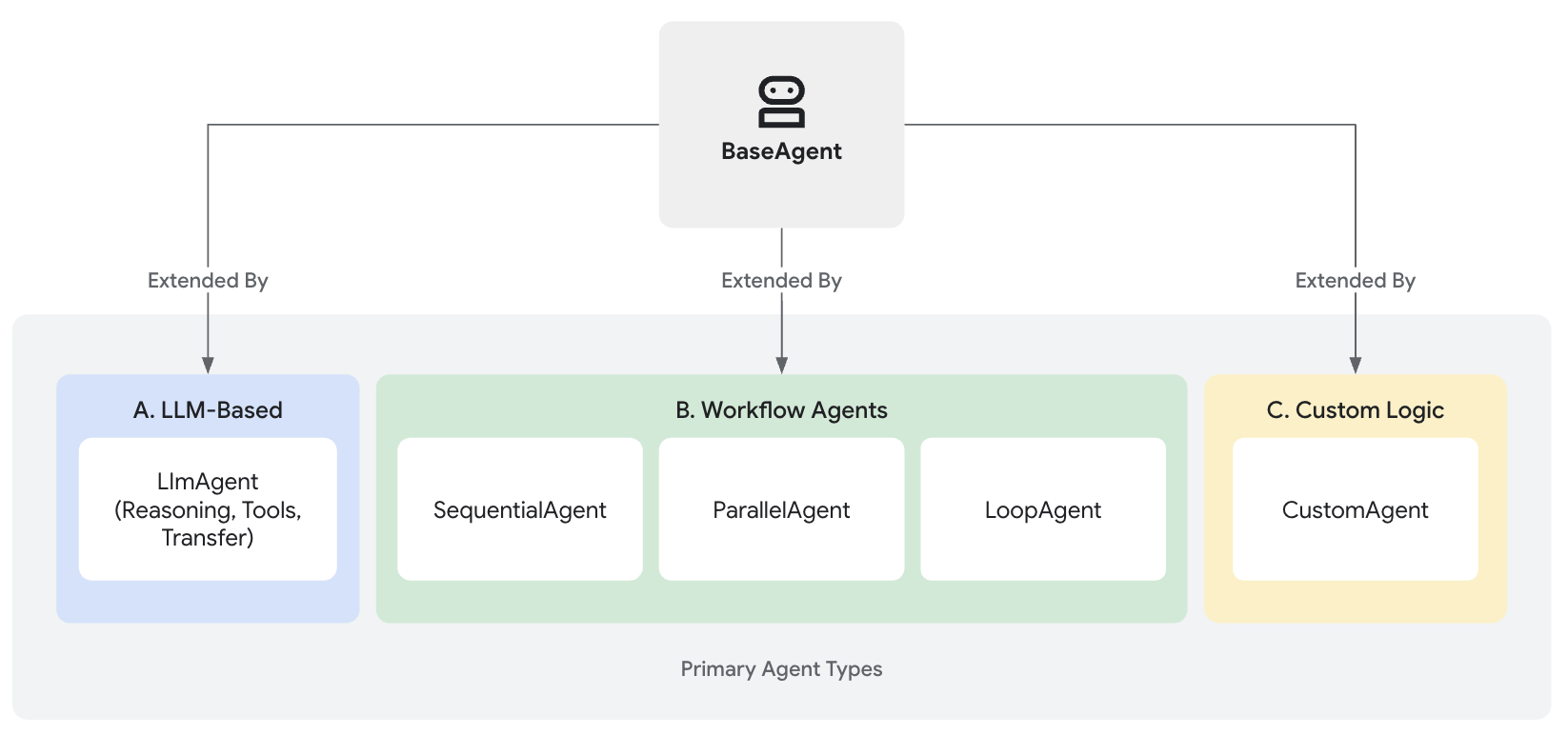
3) Built‑in Tooling + Code Execution
ADK supports tools, OpenAPI specs, and external integrations. It also ships CodeExecutor support for executing agent‑generated code safely (critical when you need deterministic sandbox behavior).

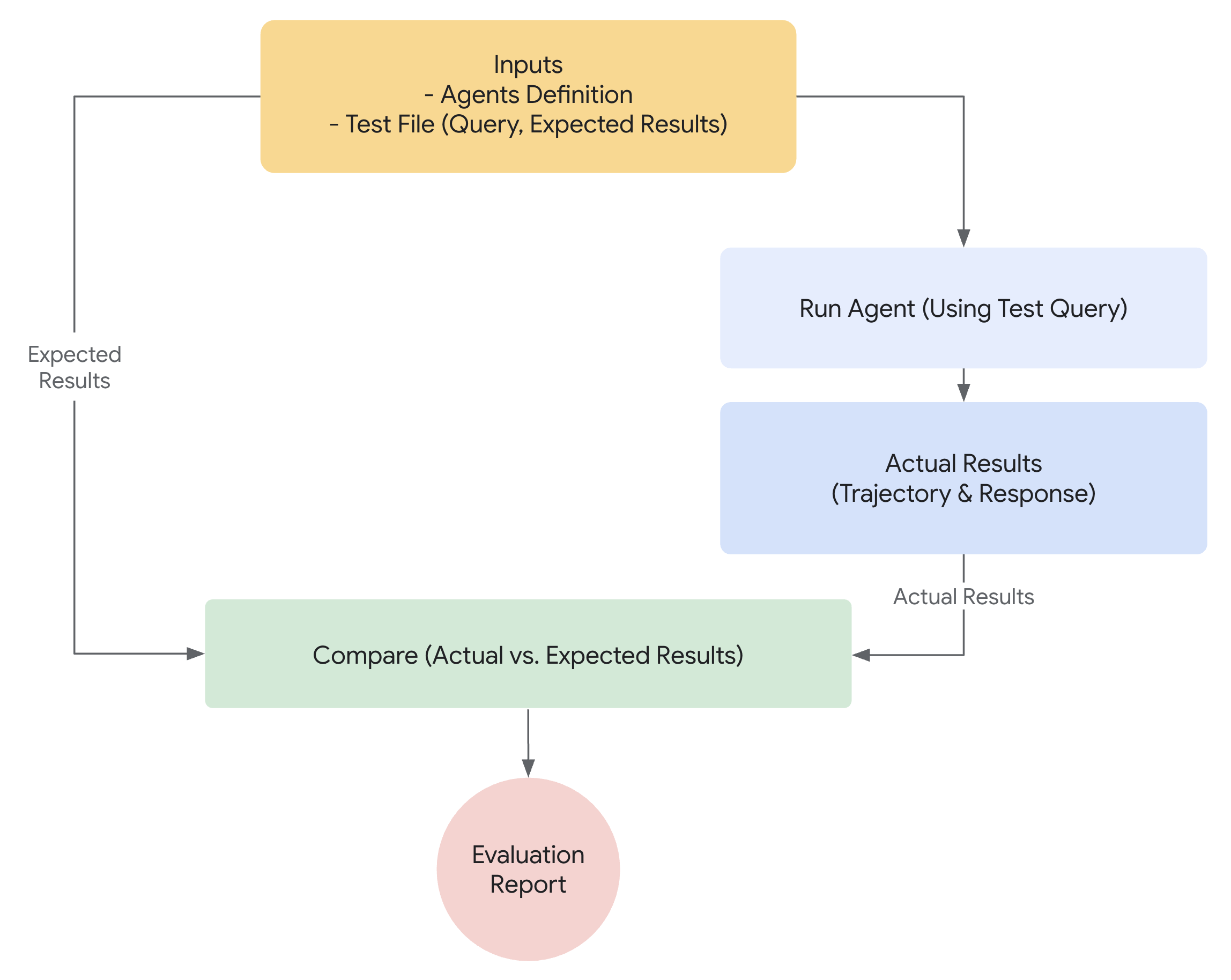
4) Evaluation Is First‑Class
This is the most production‑relevant part: ADK treats evaluation as a core workflow (not an afterthought). You can score responses and execution trajectories.
1
2
3
adk eval \
  samples_for_testing/hello_world \
  samples_for_testing/hello_world/hello_world_eval_set_001.evalset.json
5) Dev UI + Web Debugging
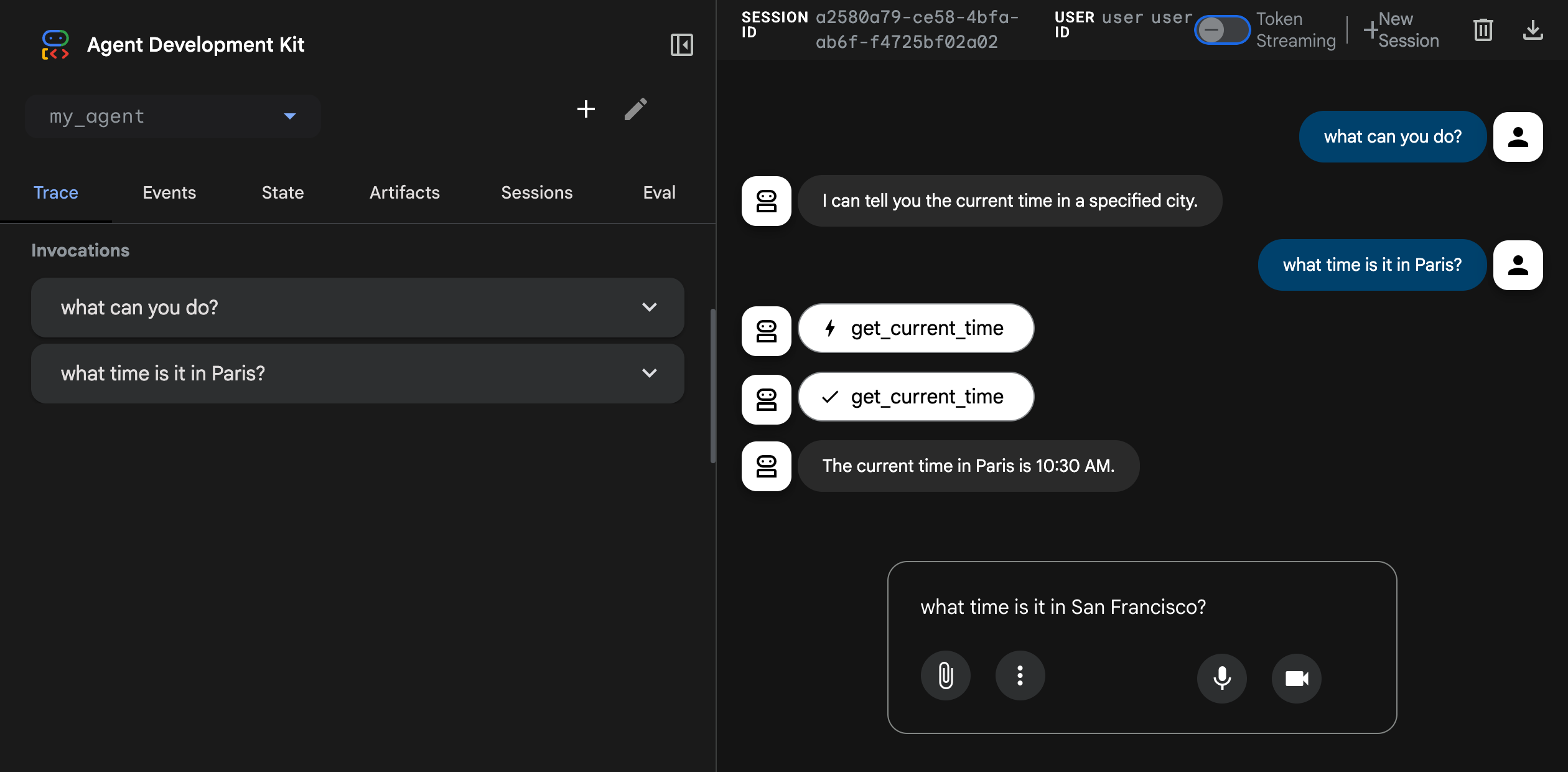
There’s a built‑in dev UI for testing, debugging, and demonstrating agent flows—this is extremely useful for communicating with non‑engineers.
📚 Retrieve: Architecture view (what I would ship)
flowchart LR
  A[Player/GM Request] --> B[Coordinator Agent]
  B --> C{Routing}
  C -->|Search| D[Search Tool]
  C -->|Code| E[Code Executor]
  C -->|Internal| F[Task Agent]
  F --> G[Evaluation]
  G --> H[Deployable Service]

  style B fill:#ff6b6b,stroke:#c92a2a,color:#fff
  style G fill:#4ecdc4,stroke:#0a9396,color:#fff
  style H fill:#ffe66d,stroke:#f4a261,color:#000
This mirrors how I’ve split routing vs. execution in live ops tools. The major win here: evaluation is an explicit layer.
💡 Innovation: How I’d use ADK for game production
Practical use case: Live‑ops incident triage
- Coordinator routes alerts (payment, fraud, crash spikes)
- Task agents run search, analysis, or incident response
- Evaluation gates whether an agent action is allowed to ship
What ADK enables (vs ad‑hoc scripts)
| Capability | Ad‑hoc scripts | ADK | Why It Matters in Games |
|---|---|---|---|
| Testability | ❌ | ✅ | Reliable regression checks before a live patch |
| Tool safety | ⚠️ | ✅ | Prevents accidental destructive actions |
| Multi‑agent routing | ⚠️ | ✅ | Clean separation of responsibility |
| Evaluation | ❌ | ✅ | You can define quality targets |
| Deployability | ⚠️ | ✅ | Production pipeline friendly |
Key Takeaways
| Insight | Implication | Next Step |
|---|---|---|
| Evaluation‑first matters | Agents need tests like any service | Build eval sets for high‑risk actions |
| Code‑first scales better | Easier to version + review | Treat agents like backend services |
| Multi‑agent is a design pattern | Separates routing vs execution | Standardize coordinator/worker templates |
New Questions I’m Asking
- How do we tune evaluation metrics to match player trust?
- What does “safe tool execution” look like at scale?
- Can we simulate player impact before we ship an agent?
References
Documentation & Guides
- ADK Docs: https://google.github.io/adk-docs/
- ADK Python Repo: https://github.com/google/adk-python
Related Projects
- ADK Samples: https://github.com/google/adk-samples
- ADK Web UI: https://github.com/google/adk-web
Community
- ADK Community: https://groups.google.com/g/adk-community