AI
Clawd Control: Real‑Time Ops for Clawdbot Agent Fleets
A concept‑first guide to Clawd Control—why agent ops dashboards matter, how this one works, and how to run it safely.
🤔 Curiosity: The Question
Once you run more than one agent, the problem flips from “can it work?” to “can I trust and operate it?” I kept asking: Where is my mission control for agent fleets?
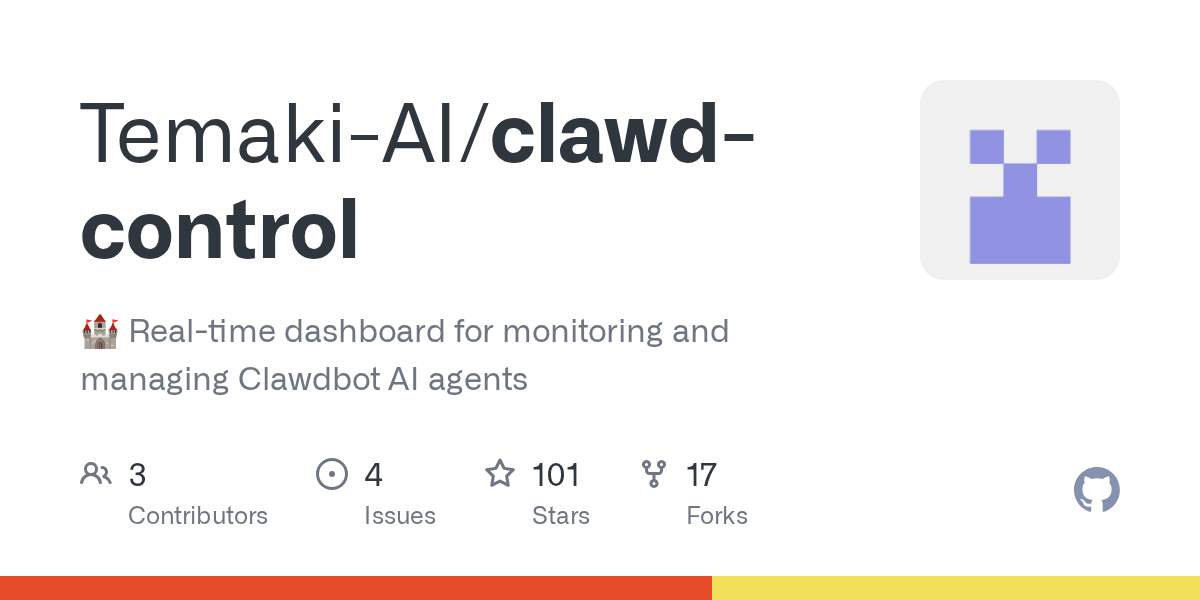
Clawd Control claims to be that layer: a real‑time dashboard for Clawdbot agents. I wanted to know if it’s just a UI—or a real ops harness.
📚 Retrieve: The Knowledge
What Clawd Control Is
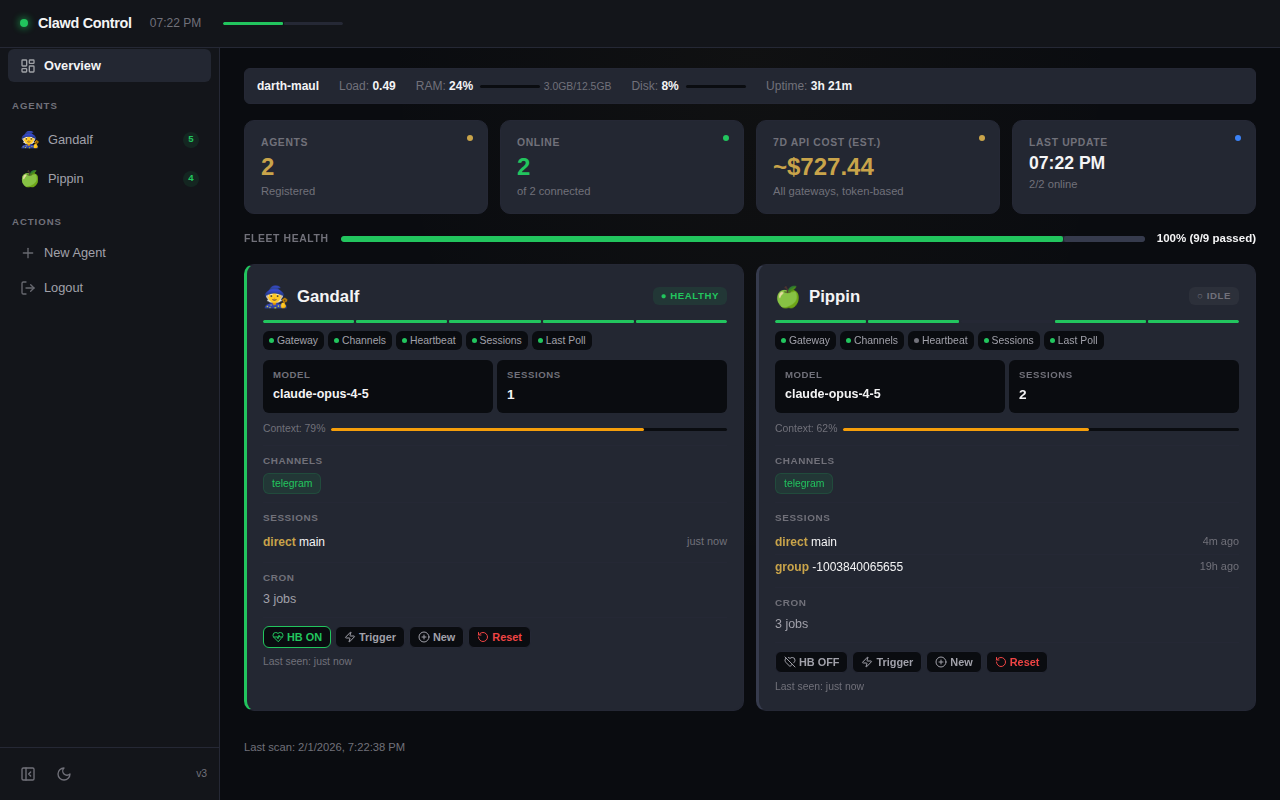
From the repo and the walkthrough, Clawd Control is a lightweight, real‑time monitoring dashboard for Clawdbot agents. It shows fleet health, per‑agent detail, and host resource usage—all in a single screen.
Key capabilities:
- Live monitoring via Server‑Sent Events (SSE)
- Fleet overview with health indicators
- Agent detail view (sessions, channels, config, env)
- Agent creation wizard for fast onboarding
- Host metrics (CPU/RAM/Disk) for infra‑vs‑agent debugging
- Auto‑discovery of local agents
Architecture: Intentionally Simple
Clawd Control avoids heavy frameworks:
- Single Node.js server
- No build step
- Vanilla HTML/JS frontend
- A small set of modules:
server.mjs,collector.mjs,discover.mjs,create-agent.mjs
This keeps deployment fast and debuggable.
Quick Start (from repo)
1
2
3
4
git clone https://github.com/Temaki-AI/clawd-control.git
cd clawd-control
npm install
npm start
Then open http://localhost:3100 and log in with the generated password.
💡 Innovation: The Insight
Why This Matters in Practice
Agent systems fail silently if you can’t see them. Clawd Control turns opaque agents into observable services. In real ops, that means:
- faster detection when an agent hangs
- clear separation between agent bugs vs resource bottlenecks
- safer scaling when the fleet grows
A Minimal Ops Checklist
1) Secure access
- use the generated password; rotate via
auth.json2) Set polling intervals - tune
pollIntervalMsandhostMetricsIntervalMs3) Register remote agents - add them to
agents.jsonwith host/port/token 4) Observe before you automate - dashboards first, auto‑actions later
Why This Matters for AI × Games
Live‑ops and QA pipelines need predictable agent behavior. A monitoring layer like this is the bridge between “agent demos” and agent production.
New Questions This Raises
- What’s the right alerting layer on top of this dashboard?
- How do we standardize metrics across different agent types?
- When should the dashboard trigger automated mitigation?
References
1) Clawd Control repo:
https://github.com/Temaki-AI/clawd-control
2) Clawd Control ops guide (Korean):
https://digitalbourgeois.tistory.com/m/2768