Agent/Orchestration
[Tutorial] A Practical Deep Dive Into Memory Optimization for Agentic Systems (Part A)
Learn how to optimize memory for AI agents, understanding the difference between memory, knowledge, and tools, and why context management is crucial for production agent systems
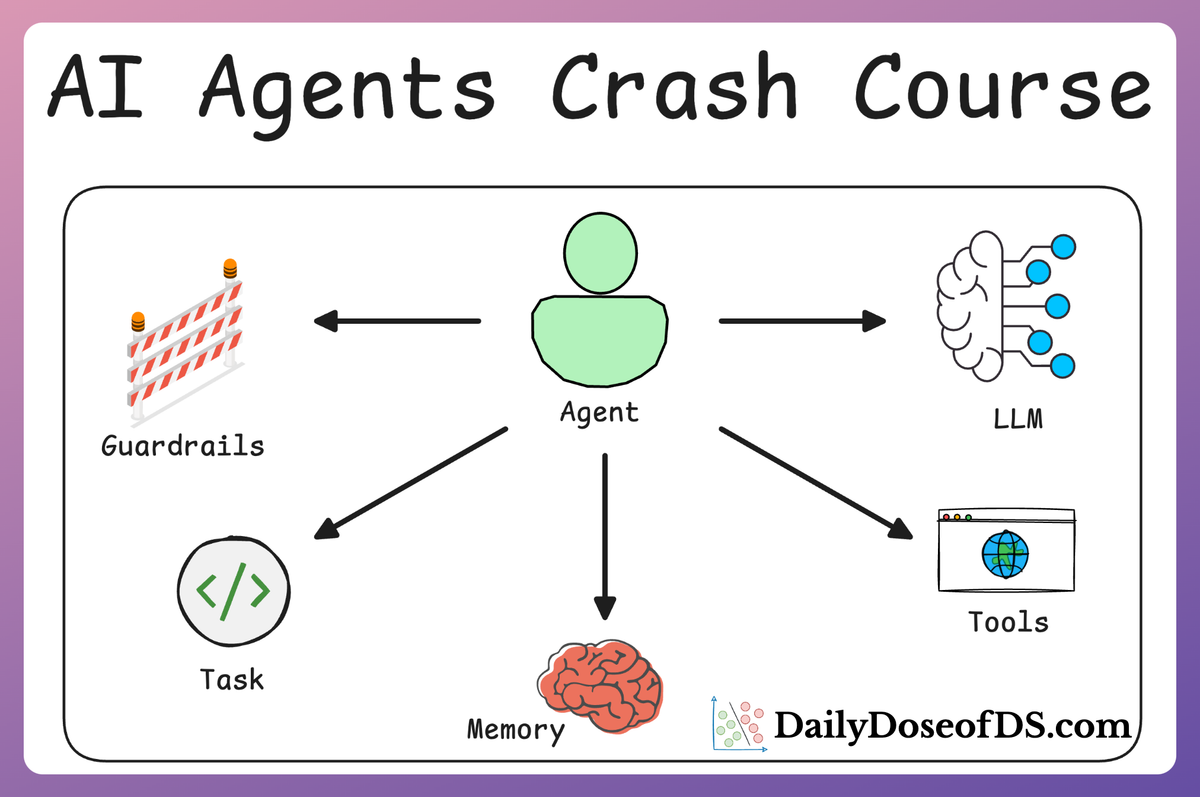
🤔 Curiosity: Why Do AI Agents Need Memory Management?
When you chat with ChatGPT or Claude, it seems like they remember everything you’ve said. But do they really? What happens when an agent needs to maintain context across multiple sessions, remember user preferences, or learn from past interactions? Is simply increasing the context window enough, or do we need something more sophisticated?
Curiosity: How do AI agents actually “remember” information? What’s the difference between memory, knowledge, and tools? And why is memory optimization crucial for production agent systems?
The reality: Every request to a large language model is stateless. The model only knows what’s in the prompt you send at that moment. To simulate memory, the system must manage context explicitly: choosing what to keep, what to discard, and what to retrieve before each new model call.
As someone building production AI systems, I’ve seen this pattern repeatedly: agents that work perfectly in demos fail in production because they can’t manage memory effectively. The problem isn’t the LLM—it’s the memory system design.
The question: How do we design memory systems that enable agents to remember what matters, forget what doesn’t, and retrieve information efficiently?
Retrieve: Memory is not a property of the model itself—it’s a system design problem. Unlike knowledge (static, global information) or tools (on-demand information access), memory is dynamic and contextual, consisting of data stored during operations like conversation history, user preferences, and task state.
📚 Retrieve: Understanding Memory, Knowledge, and Tools
The Three Pillars of Agent Information
Before diving into memory optimization, it’s crucial to understand three related but distinct concepts:
| Concept | Nature | Scope | Example |
|---|---|---|---|
| Knowledge | Static, global | Background information | Documentation, knowledge base, training data |
| Tools | On-demand | Fetch/calculate when needed | Web browser, database query, calculator |
| Memory | Dynamic, contextual | Stored during operations | Conversation history, user preferences, task state |
Key Distinctions:
Knowledge refers to information that is static or global:
- Knowledge bases, documentation, facts learned during training
- Doesn’t change based on user interactions
- Background information accessible at any time
Tools fill a different role:
- Let agents fetch, calculate, or derive information on demand
- Web browser, database query, calculator
- Help access information but don’t remember by default
Memory is different from both:
- Dynamic and contextual
- Data stored during operations: conversation history, user preferences, previous outputs, task state
- Tells the agent what has been happening over time, not just what is true about the world
Why Memory Matters
Without Memory:
- Every interaction is a blank slate
- Users must repeat themselves constantly
- Agents lose context between steps of multi-turn tasks
- Personalization becomes impossible
- Agents can’t learn from past experiences
With Memory:
- Context-aware agents that remember facts like:
- “You like to eat Pizza without capsicum”
- “This ticket is about login errors in the mobile app”
- “We’ve already generated a draft for this topic”
- “The user rejected the last suggestion. Don’t propose it again”
Key Benefits:
- Context Retention: Agents can carry on coherent dialogues, referring back to earlier parts without repeating details
- Personalization: Store user-specific information and tailor responses accordingly
- Continuous Learning: Remember outcomes and facts from previous runs to improve decision-making
💡 Innovation: The Context Problem in Production
The False Promise of Large Context Windows
Many developers assume that ever-increasing context windows (100K, 200K, or even 1 million tokens) will eliminate the need for memory management. They think: “With a large enough window, just throw everything into the prompt and let the model handle it.”
This assumption breaks down in production:
graph TB
    A[Large Context Window] --> B[Assumption: Throw Everything In]
    B --> C[Production Reality]

    C --> D[High Token Costs]
    C --> E[High Inference Latency]
    C --> F[Information Retrieval Failure]

    D --> G[Financially Unsustainable]
    E --> H[Poor User Experience]
    F --> I[Needle in Haystack Problem]
    F --> J[Recency Decay]

    style A fill:#ff6b6b,stroke:#c92a2a,stroke-width:2px,color:#fff
    style C fill:#ffe66d,stroke:#f4a261,stroke-width:2px,color:#000
    style G fill:#ff6b6b,stroke:#c92a2a,stroke-width:2px,color:#fff
    style H fill:#ff6b6b,stroke:#c92a2a,stroke-width:2px,color:#fff
    style I fill:#ff6b6b,stroke:#c92a2a,stroke-width:2px,color:#fff
Three Critical Production Problems
1. Token Costs
Every token sent to the LLM costs money. Sending a massive, unmanaged 200,000-token conversation history on every single turn is financially unsustainable.
Example:
- Average conversation: 200K tokens
- Cost per 1K tokens: $0.01 (example)
- Cost per turn: $2.00
- 1000 users, 10 turns each: $20,000
Solution: Strategic memory management reduces token costs by 80-90%.
2. Inference Latency
Injecting enormous contexts into every prompt leads to high inference latency. If users wait 10-15 seconds for a response, your system is failing in production.
Impact:
- Large contexts → Slow inference → Poor UX
- Users expect < 2 second responses
- Memory optimization enables fast, relevant context retrieval
3. Information Retrieval Failure
Simply including everything doesn’t mean the agent will use it. This is the most subtle and arguably most important failure mode.
Research Findings:
“Needle in a Haystack” Problem:
- Information buried deep in massive context is often ignored
- Context window is wide, but focus is narrow
- Models struggle to find relevant information in large contexts
Recency Decay:
- LLMs often suffer from recency bias
- Crucial, recently added instructions can be forgotten if surrounded by verbose history
- Models might ignore new rules buried in long-standing system instructions
Google DeepMind’s Gemini 2.5 Discovery:
The Gemini 2.5 technical report revealed that instead of using training to develop new strategies, agents became fixated on repeating past actions from extensive context history. This teaches us that:
Memory is not a passive storage mechanism—it’s an active process of strategic placement.
We must carefully engineer context to ensure agents use the right information at the right time.
The Need for Memory Optimization
Key Insight: It’s not just about what the LLM remembers, but how you present it to the LLM. This is crucial for building effective production agents.
Requirements:
- Agents must actively manage memory
- Most relevant facts must be prioritized
- System must be more nuanced than a simple history dump
- Selective memory: remember what matters, forget what doesn’t
Challenge: Maintaining consistent memory over prolonged interactions or tasks, just as humans selectively remember important details and let trivial ones fade.
🎯 Memory Optimization Strategies
Strategic Memory Management
Core Principles:
- Relevance Over Volume: Store only what’s relevant, not everything
- Active Retrieval: Retrieve information strategically, not passively
- Contextual Placement: Present information where it’s most effective
- Selective Forgetting: Discard irrelevant information to prevent bloat
Memory Types in Agent Systems
graph TB
    A[Agent Memory System] --> B[Short-term Memory]
    A --> C[Long-term Memory]
    A --> D[Working Memory]

    B --> E[Current Session]
    B --> F[Recent Interactions]

    C --> G[User Preferences]
    C --> H[Historical Context]
    C --> I[Learned Patterns]

    D --> J[Active Task State]
    D --> K[Current Context]

    style A fill:#4ecdc4,stroke:#0a9396,stroke-width:3px,color:#fff
    style B fill:#ffe66d,stroke:#f4a261,stroke-width:2px,color:#000
    style C fill:#95e1d3,stroke:#2d8659,stroke-width:2px,color:#000
    style D fill:#ff6b6b,stroke:#c92a2a,stroke-width:2px,color:#fff
1. Short-term Memory:
- Current session context
- Recent interactions
- Temporary task state
- Typically: Last N turns or time-based window
2. Long-term Memory:
- User preferences
- Historical context
- Learned patterns
- Persistent across sessions
3. Working Memory:
- Active task state
- Current context being processed
- Information needed for immediate decision
Implementation Approaches
Traditional Approach: Simple History Dump
1
2
3
4
5
6
7
8
9
10
11
12
13
14
15
16
17
18
19
20
21
22
23
# ❌ Bad: Dumping everything
class SimpleMemoryAgent:
    def __init__(self):
        self.conversation_history = []

    def chat(self, user_input):
        # Add everything to history
        self.conversation_history.append({
            'role': 'user',
            'content': user_input
        })

        # Send entire history to LLM
        response = self.llm.generate(
            messages=self.conversation_history  # Everything!
        )

        self.conversation_history.append({
            'role': 'assistant',
            'content': response
        })

        return response
Problems:
- Grows unbounded
- Includes irrelevant information
- High token costs
- Slow inference
Optimized Approach: Strategic Memory Management
1
2
3
4
5
6
7
8
9
10
11
12
13
14
15
16
17
18
19
20
21
22
23
24
25
26
27
28
29
30
31
32
33
34
35
36
37
38
39
40
41
42
43
44
45
46
47
48
49
50
51
52
53
54
55
56
57
58
59
60
61
# ✅ Good: Strategic memory management
class OptimizedMemoryAgent:
    def __init__(self):
        self.short_term_memory = []  # Recent context
        self.long_term_memory = VectorDB()  # Persistent storage
        self.max_short_term = 10  # Last 10 turns

    def chat(self, user_input):
        # 1. Retrieve relevant long-term memory
        relevant_context = self.long_term_memory.search(
            query=user_input,
            top_k=5
        )

        # 2. Maintain bounded short-term memory
        if len(self.short_term_memory) >= self.max_short_term:
            # Move old context to long-term
            self._archive_old_context()

        # 3. Build optimized context
        context = self._build_context(
            short_term=self.short_term_memory,
            long_term=relevant_context,
            current_input=user_input
        )

        # 4. Generate response
        response = self.llm.generate(messages=context)

        # 5. Update memory
        self._update_memory(user_input, response)

        return response

    def _build_context(self, short_term, long_term, current_input):
        """Build optimized context with only relevant information"""
        messages = []

        # Add system prompt
        messages.append({
            'role': 'system',
            'content': self.system_prompt
        })

        # Add relevant long-term context
        for item in long_term:
            messages.append({
                'role': 'system',
                'content': f"Context: {item['content']}"
            })

        # Add recent short-term context
        messages.extend(short_term[-5:])  # Last 5 turns

        # Add current input
        messages.append({
            'role': 'user',
            'content': current_input
        })

        return messages
Benefits:
- Bounded memory growth
- Only relevant information included
- Reduced token costs
- Faster inference
- Better information retrieval
🛠️ LangGraph for Memory Management
Why LangGraph?
LangGraph is designed for stateful, multi-actor applications leveraging LLMs. Unlike traditional linear workflows, LangGraph introduces:
- Graph-based execution model: Workflows as graphs of nodes and edges
- Persistent state management: Built-in state handling
- Multi-agent coordination: Better suited for advanced applications
Key Advantages for Memory:
- Stateful Execution: Natural fit for memory management
- Graph Structure: Enables complex memory retrieval patterns
- Persistent State: Built-in mechanisms for state persistence
- Modular Design: Easy to add memory components
LangGraph Memory Architecture
graph TB
    A[User Input] --> B[Memory Retrieval Node]
    B --> C[Context Builder Node]
    C --> D[LLM Node]
    D --> E[Memory Update Node]
    E --> F[Response]

    B --> G[Short-term Memory]
    B --> H[Long-term Memory]
    E --> G
    E --> H

    style A fill:#e1f5ff,stroke:#0a9396,stroke-width:2px
    style D fill:#ff6b6b,stroke:#c92a2a,stroke-width:3px,color:#fff
    style G fill:#ffe66d,stroke:#f4a261,stroke-width:2px,color:#000
    style H fill:#95e1d3,stroke:#2d8659,stroke-width:2px,color:#000
Node Responsibilities:
- Memory Retrieval Node: Retrieves relevant information from memory stores
- Context Builder Node: Constructs optimized context for LLM
- LLM Node: Generates response using optimized context
- Memory Update Node: Updates memory with new information
🎯 Key Takeaways
| Insight | Implication | Action Item |
|---|---|---|
| Memory ≠ Knowledge ≠ Tools | Understand the distinction | Design separate systems for each |
| Large context ≠ Better performance | Context management is crucial | Implement strategic memory management |
| Token costs matter | Unmanaged memory is expensive | Optimize context size |
| Information retrieval fails | Strategic placement matters | Design retrieval systems carefully |
| Memory is active, not passive | Requires active management | Build memory management systems |
Why This Matters
Memory optimization is crucial for production agent systems:
- Cost Efficiency: Reduces token costs by 80-90%
- Performance: Enables fast inference (< 2 seconds)
- Reliability: Improves information retrieval accuracy
- Scalability: Supports long-running, multi-session interactions
- User Experience: Enables personalization and context awareness
The Challenge: Building memory systems that balance relevance, efficiency, and accuracy. But with proper design, agents can remember what matters and forget what doesn’t.
🤔 New Questions This Raises
How do we determine what information is relevant? What metrics should we use for memory retrieval?
What’s the optimal balance between short-term and long-term memory? How do we decide what to archive?
How do we handle memory conflicts? What happens when new information contradicts old memories?
Can we learn memory management strategies? Can agents learn which information to keep vs. discard?
How do we evaluate memory systems? What metrics matter for production memory optimization?
Next steps: In Part B, we’ll dive into practical implementations using LangGraph, covering specific memory patterns, retrieval strategies, and optimization techniques.
References
Original Article:
AI Agents Crash Course:
Memory and Context Management:
- MemGPT: External Memory Management for LLMs
- Needle in a Haystack: Information Retrieval in Long Contexts
- Gemini 2.5 Technical Report
LangGraph:
Context Engineering:
- Context Engineering: A New Discipline
- Many-Shot In-Context Learning
Vector Databases for Memory:
Memory Optimization Techniques: