AI
CLI-Anything: Why Agent-Native Interfaces Matter More Than Bigger Models
CLI-Anything reframes agent reliability as an interface and harness problem: structured CLIs, deterministic execution, and installable tool surfaces that scale beyond demos.
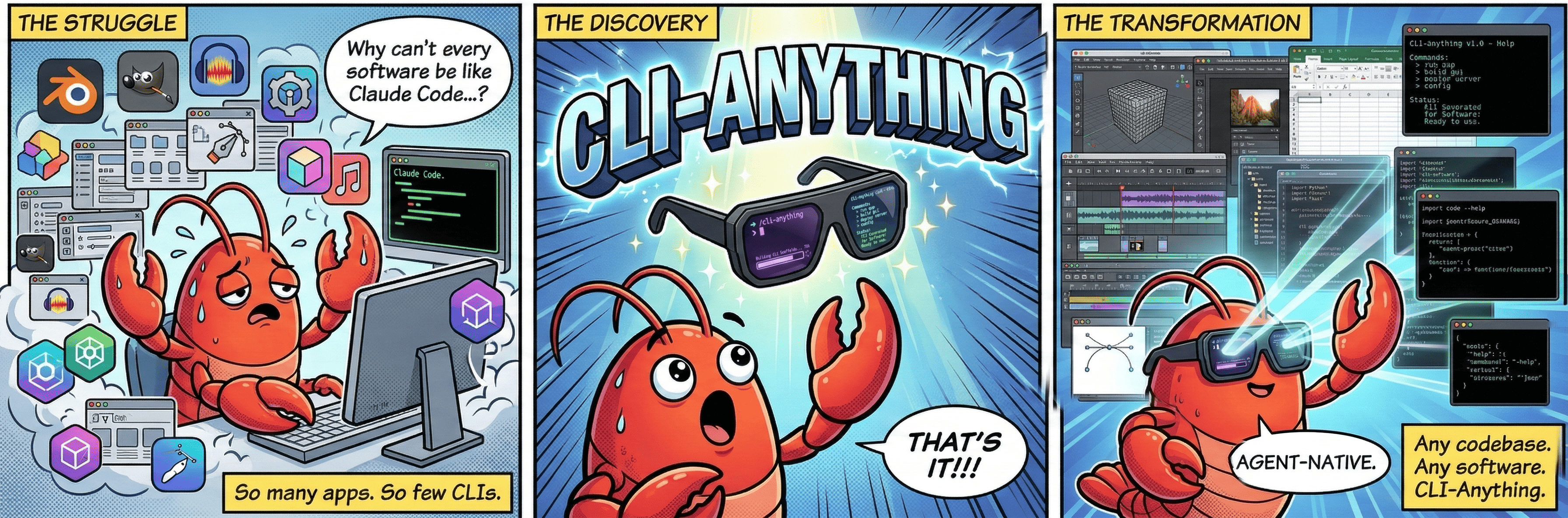
🤔 Curiosity: Why do many capable agents still fail on real software tasks?
Most agent demos look strong until the workflow becomes long, stateful, and tool-heavy.
Then the same breakdown appears: the agent starts too early, fills missing constraints with guesses, and spends context repairing those guesses later.
That pattern is usually blamed on model quality. I think that diagnosis is incomplete.
The bigger issue is often interface quality: if software is not machine-legible by design, even strong models behave unpredictably.

📚 Retrieve: What CLI-Anything is actually building
CLI-Anything pushes a simple but important idea:
Tomorrow’s users are not only humans. They are also agents.
So the system surface should be built for both.
Instead of forcing agents to improvise over GUIs, CLI-Anything wraps software into structured CLIs with explicit commands, inspectable options, and automation-friendly behavior.
That gives practical benefits:
- clearer tool boundaries,
- better reproducibility,
- easier orchestration,
- lower parsing ambiguity,
- and cleaner recovery when workflows fail.
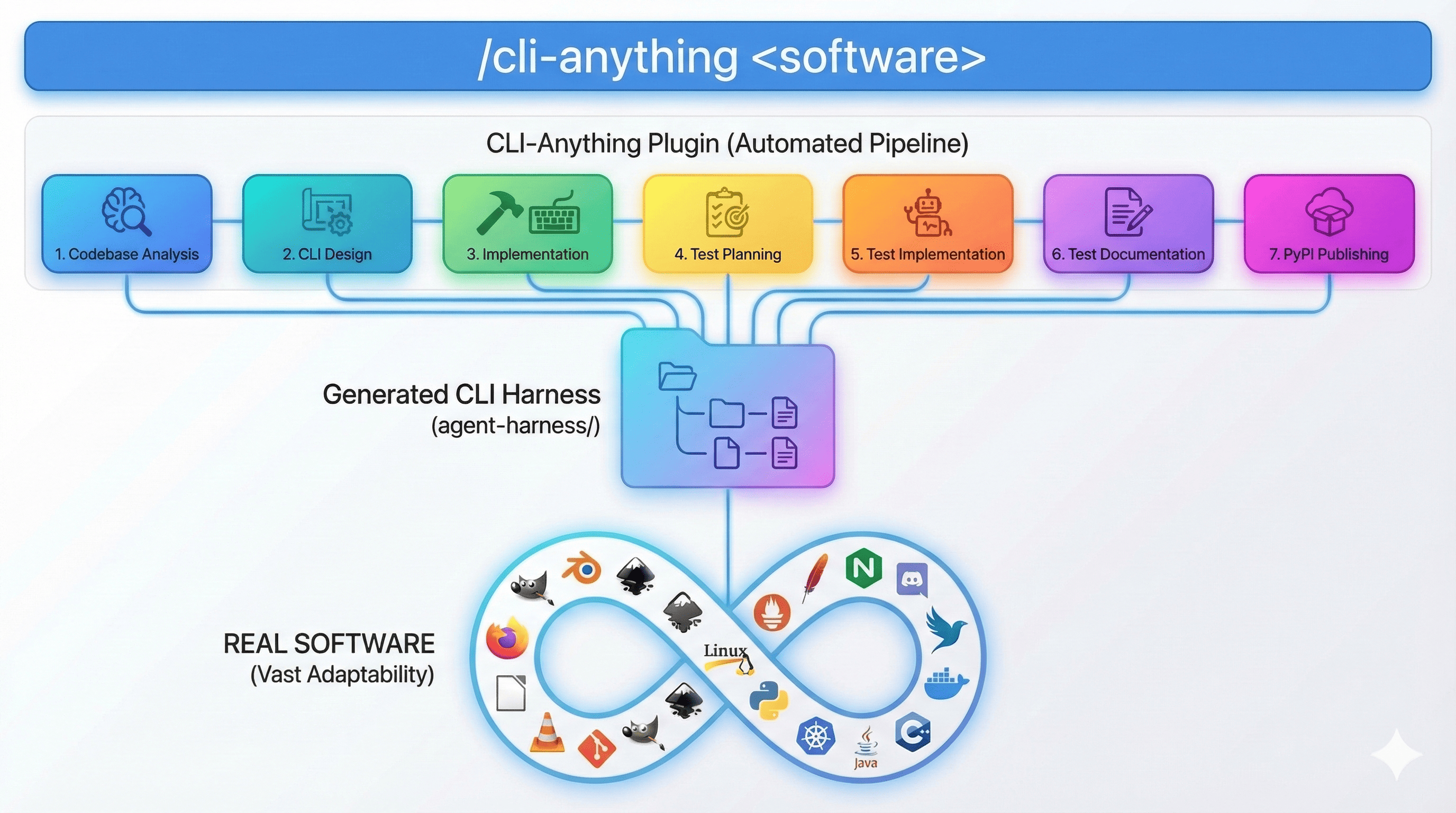
Why this architecture signal matters
If your stack is agent-first, deterministic interfaces are not a “nice to have.”
They are the baseline that lets planning, execution, validation, and retry loops work in production.
CLI-Anything treats that baseline as product infrastructure, not a post-processing hack.
Real-world artifact bias (not only benchmark bias)
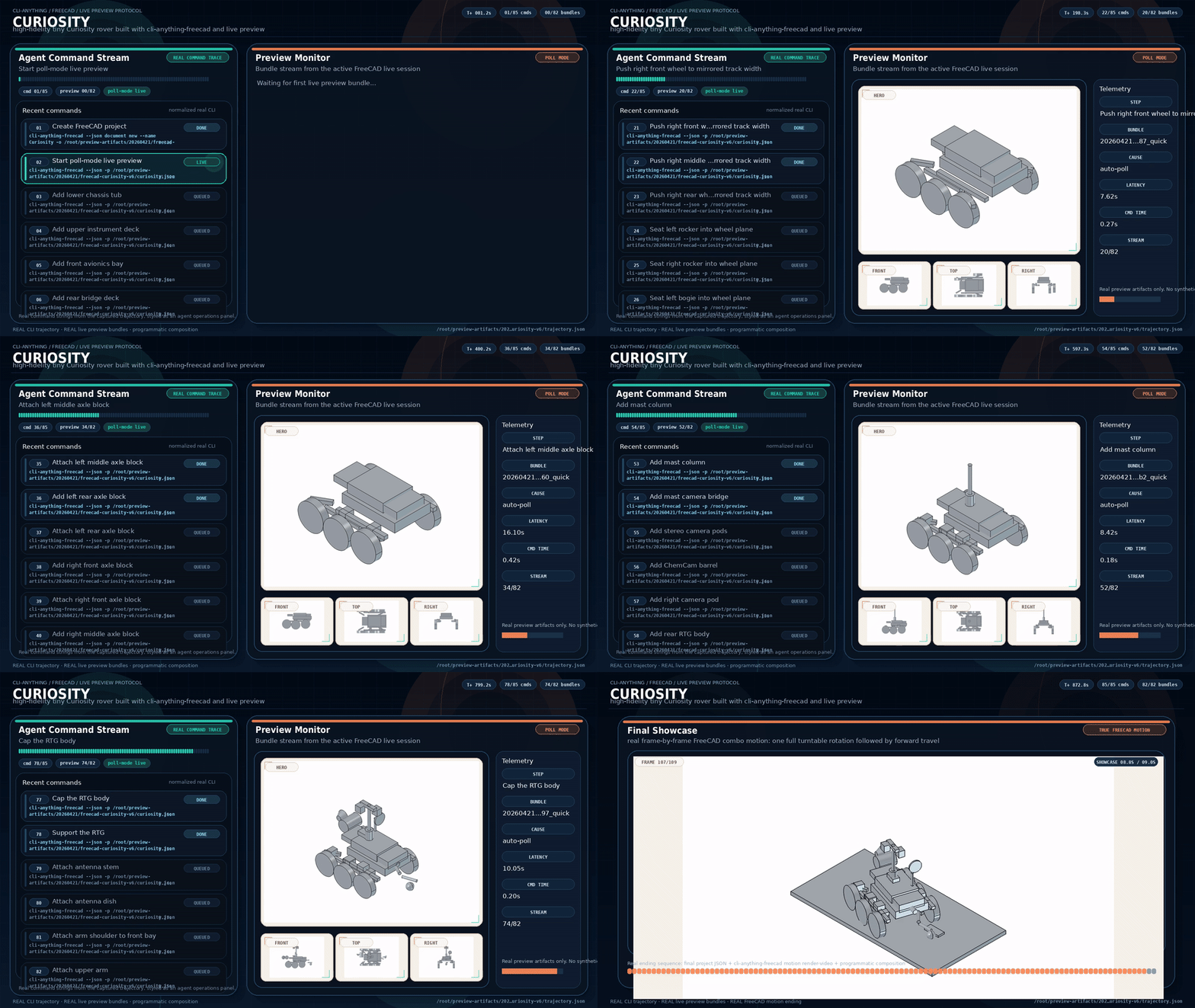
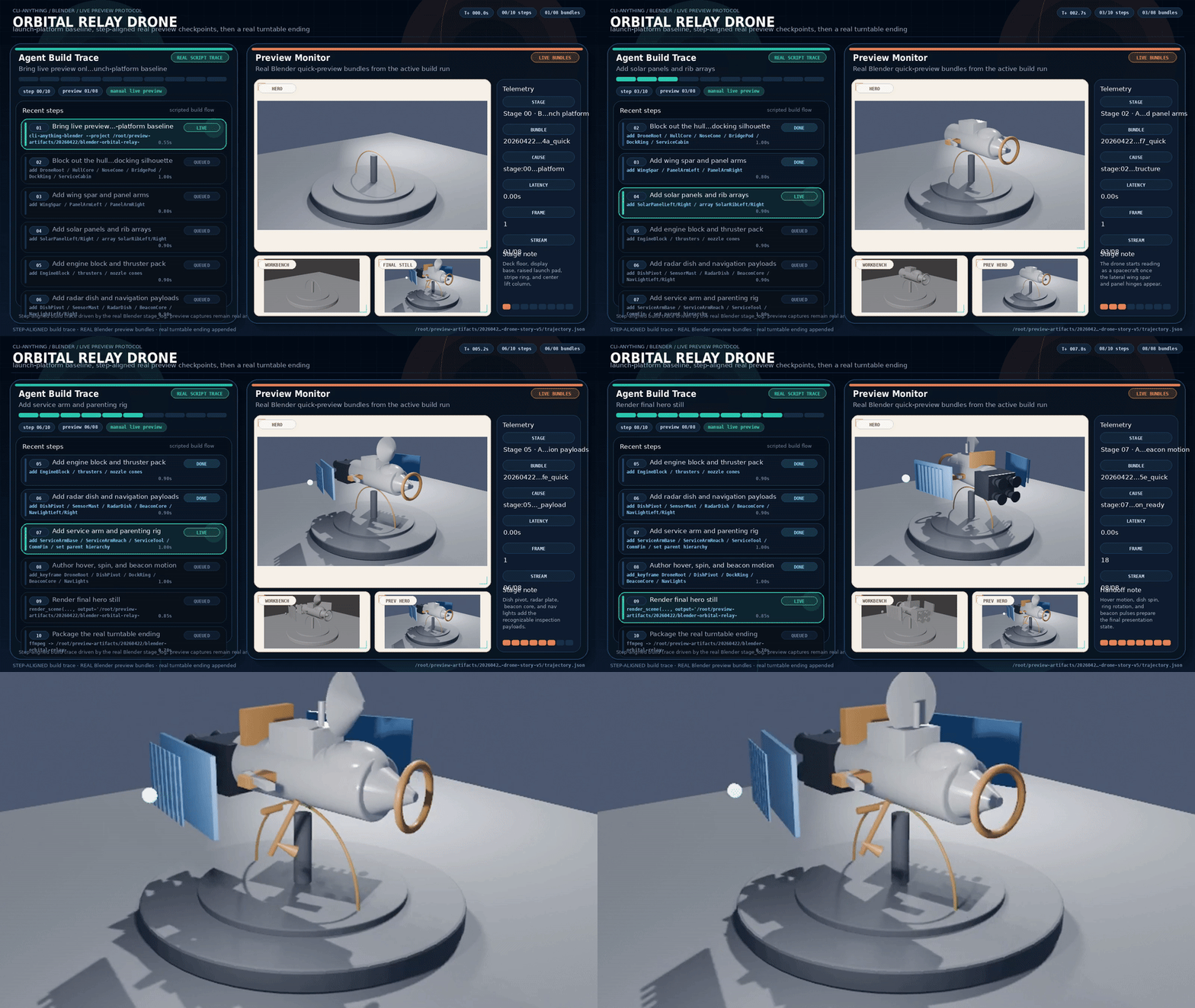
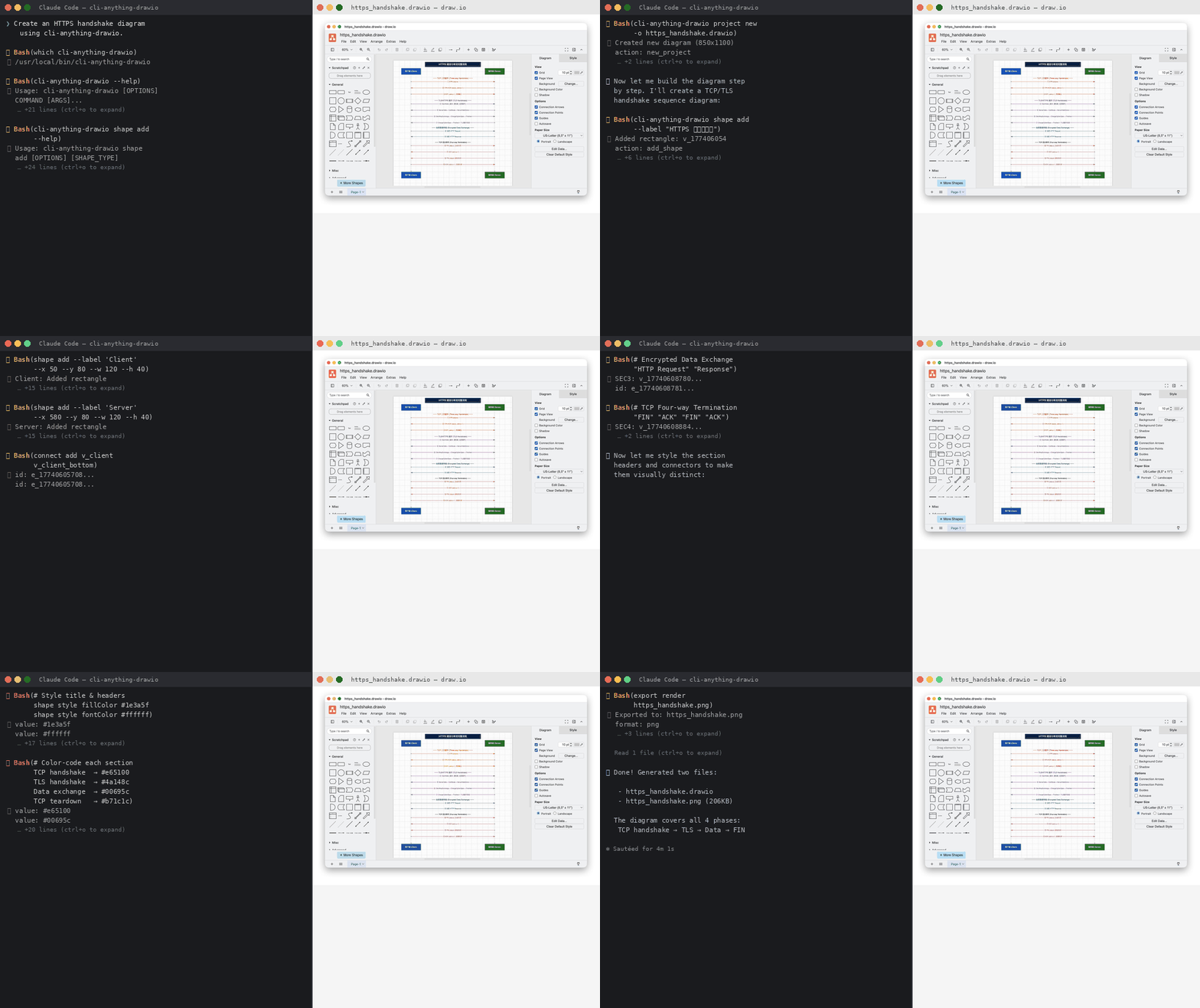
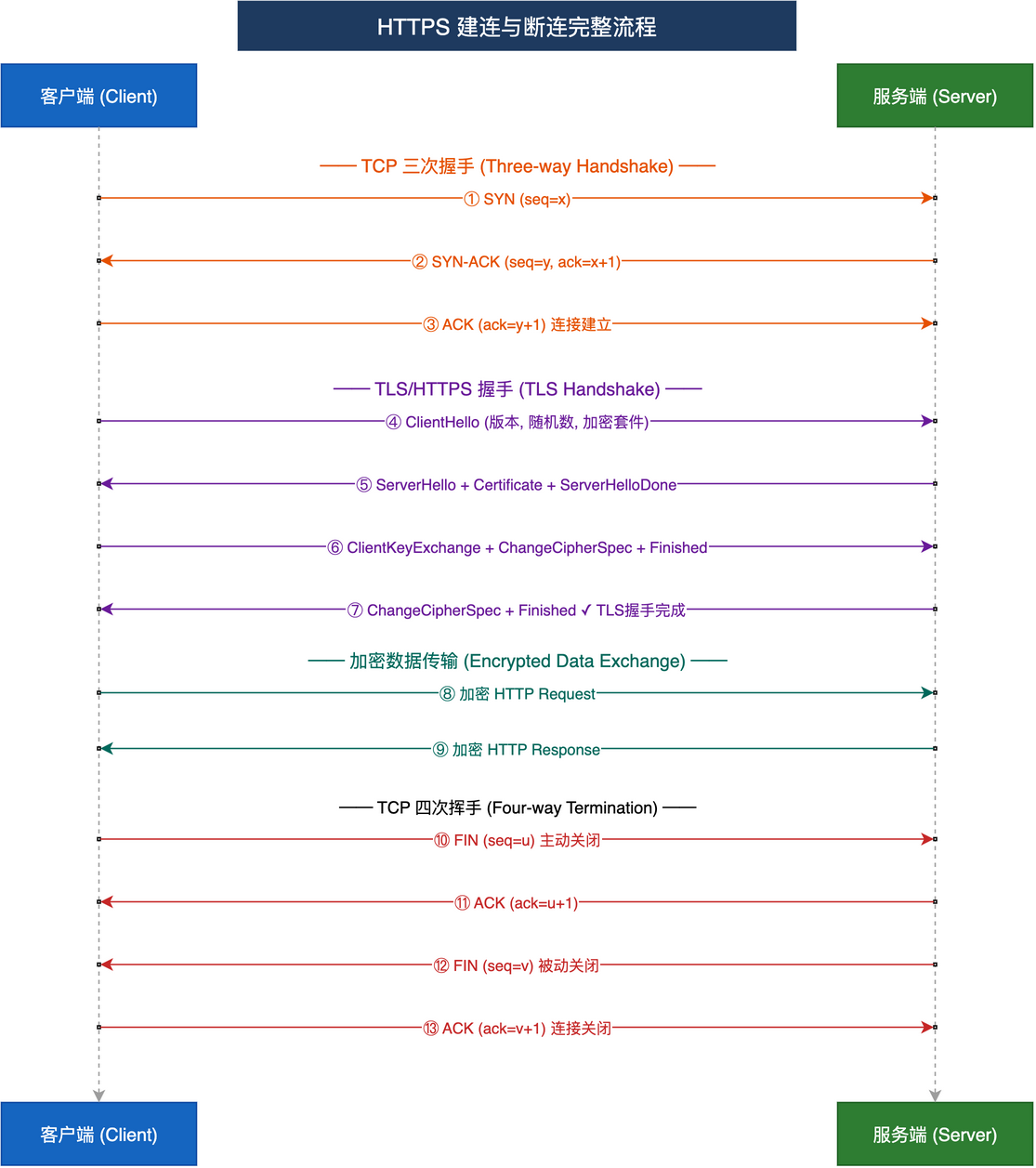
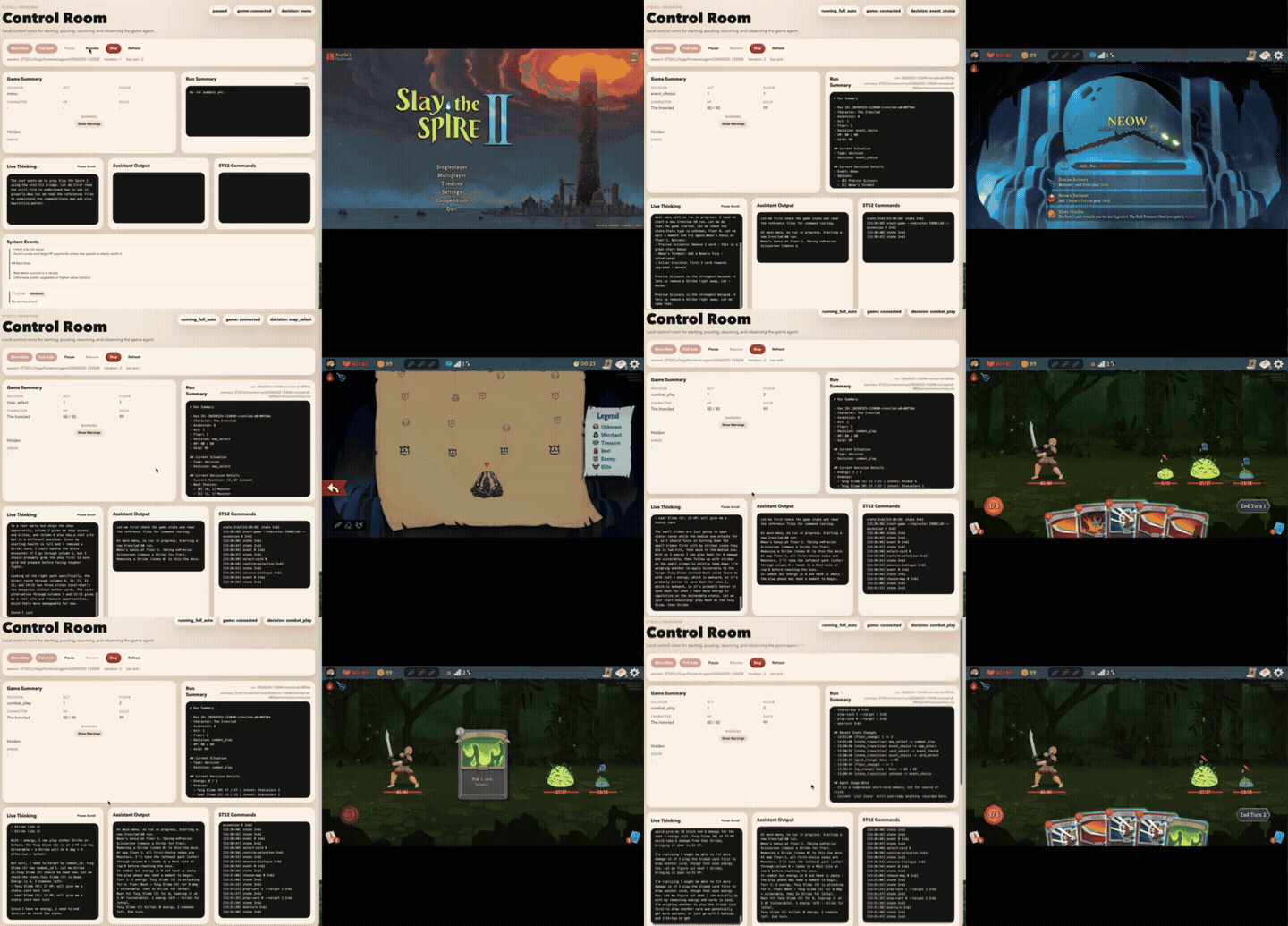
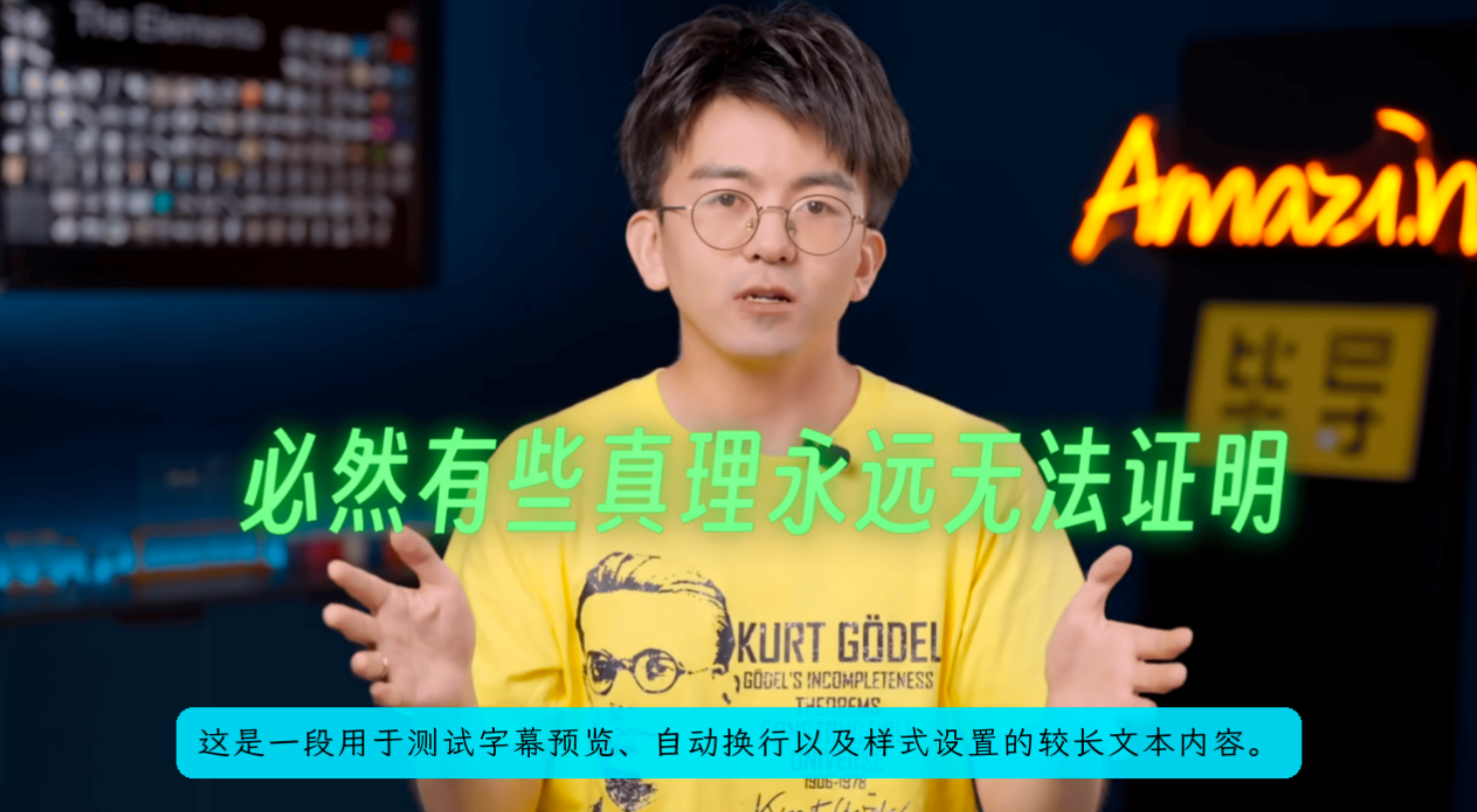
One thing I liked in the project is the visible demo orientation: CAD generation, 3D scene creation, diagram output, gameplay loops, subtitle workflows.
That emphasis matters because teams ship artifacts, not benchmark screenshots.
🧪 What this means for product engineering
If we want reliable agent systems, we need to optimize for workflow completion, not just first-pass generation quality.
That means designing for:
- explicit command surfaces,
- machine-readable outputs,
- composable execution steps,
- and observable failure boundaries.
CLI-Anything’s harness and hub direction aligns with that operational reality.
Even its install/distribution path (CLI-Hub) is pointed at adoption friction, which is where many strong open-source ideas usually stall.
💡 Innovation: The next leverage is interface discipline
I read CLI-Anything as part of a broader shift:
- from model-centric thinking to system-centric thinking,
- from prompt cleverness to interface discipline,
- from one-off demos to maintainable agent infrastructure.
The key lesson is not “use this exact toolchain.”
It is this:
Better models help. Better interfaces compound.
If your team is serious about agentic workflows, this is the layer worth investing in early.
References
- CLI-Anything repository: https://github.com/HKUDS/CLI-Anything
- CLI-Hub: https://hkuds.github.io/CLI-Anything/
- Source images: https://github.com/HKUDS/CLI-Anything/tree/main/assets