Agent/Orchestration
nanobot: A 4K‑Line Personal Agent and Why Minimalism Matters
A game‑dev view on HKUDS/nanobot—an ultra‑light Clawdbot‑inspired agent—why the tiny codebase changes how we learn, iterate, and ship.
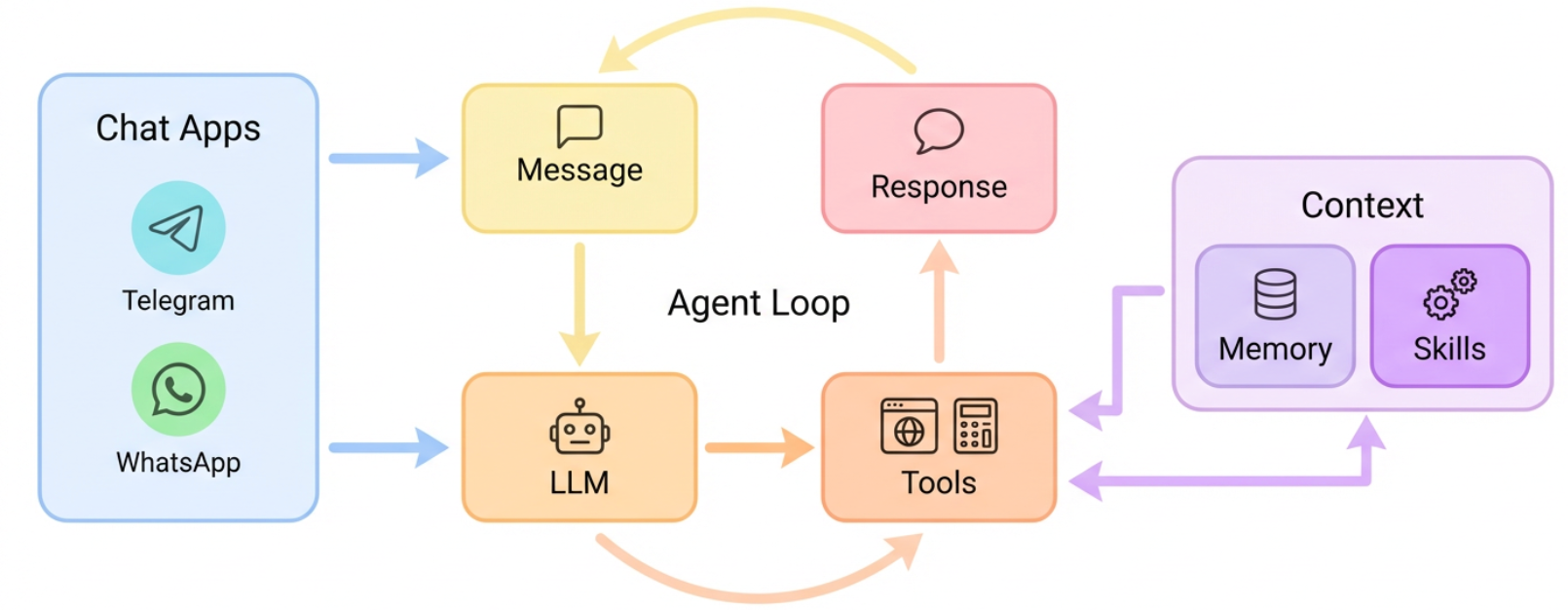
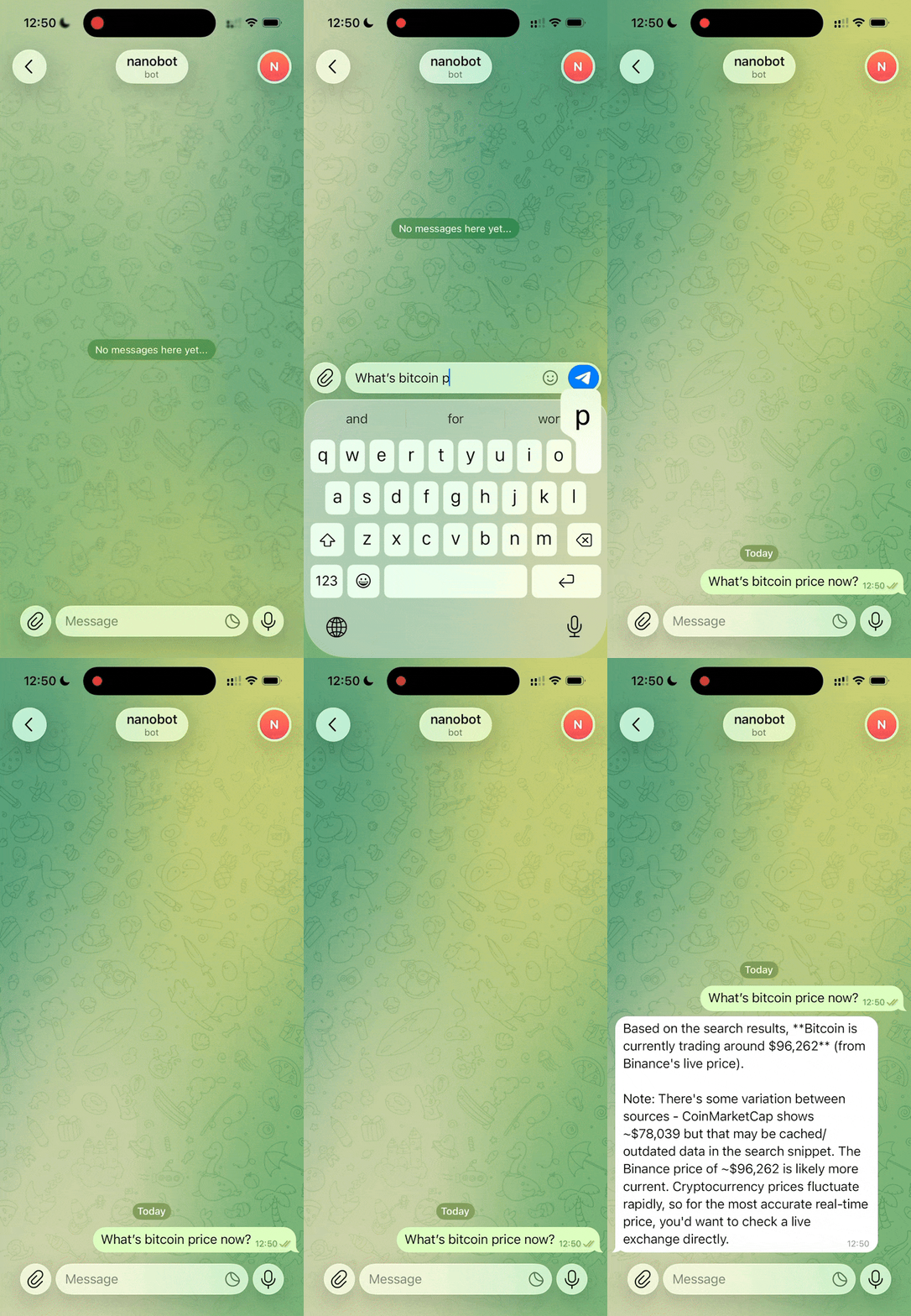
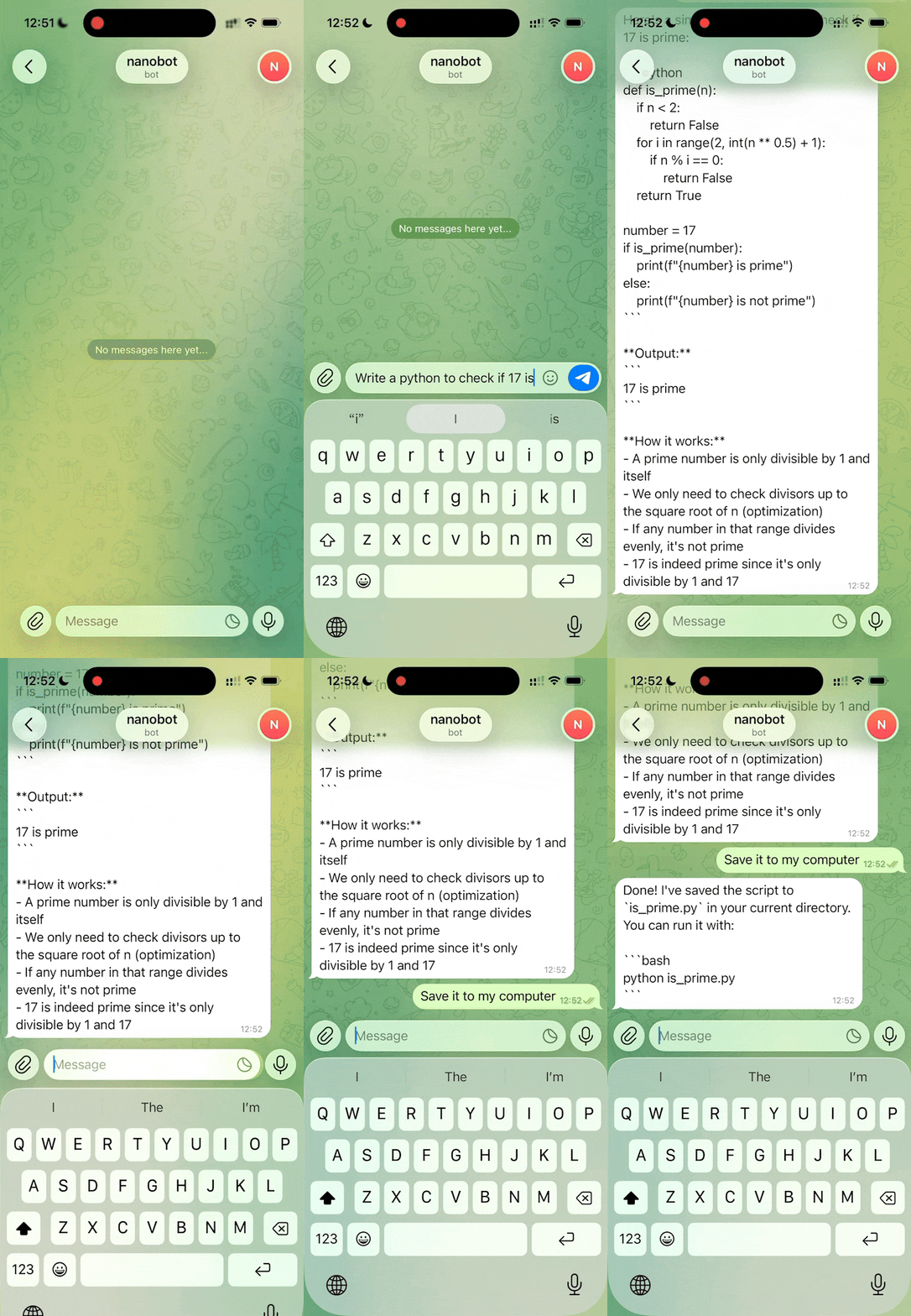
🤔 Curiosity: Do we really need 400k lines to build an agent?
When I ship AI features in games, the tightest bottleneck isn’t inference—it’s iteration speed. So the question that grabbed me here is simple: what happens if an agent framework is small enough to fully understand and modify in a weekend?
HKUDS’s nanobot takes that extreme position: keep the core, delete the bloat, and make the agent readable again. That’s a big deal for anyone who wants to experiment fast, especially in production‑style workflows.
📚 Retrieve: What nanobot actually is
From the repo and the Korean deep‑dive, the core idea is clear:
- ~4,000 lines of code for core agent functionality (roughly 99% smaller than Clawdbot)
- Research‑ready: readable, hackable, easy to extend
- Fast startup, low resource footprint
- Practical features baked in: routine management, knowledge assistant, and task automation
Architecture at a glance (from the repo)
The structure is intentionally straightforward:
agent/— loop, context, memory, skills, subagent, toolsskills/— bundled skillschannels/— WhatsApp + Telegramcron/+heartbeat/— scheduling + proactive wake‑upsproviders/— LLM backends (OpenRouter, vLLM, etc.)
Why this matters (from the blog analysis)
- Small codebase = fast comprehension
- Easy for research: minimal overhead for experiments
- Lower costs: can run on constrained machines or local LLMs
- CLI‑first: scriptable, automatable, production‑friendly
💡 Innovation: How I’d use this in a game‑dev pipeline
1) “Prototype Agent” for rapid experiments
- With a tiny core, I can instrument the loop to test new reward shaping, memory policies, or prompt‑tool strategies.
- Perfect for PCG or behavior tuning where I need fast iteration.
2) Lightweight “assistant pods” for production
- Use nanobot as small, single‑purpose agents: asset QA, log triage, or nightly build analysis.
- The minimal runtime cost means I can run many cheap agents in parallel.
3) Local‑first + private data
- The vLLM mode means I can run local models when I need data isolation.
- That’s critical when prototypes include proprietary level data or player behavior logs.
Key Takeaways
| Insight | Implication | Next Steps |
|---|---|---|
| Small codebases change velocity | Faster iteration, easier experimentation | Use nanobot as “research sandbox” |
| CLI‑first means automation | Easy to integrate into pipelines | Wrap it into build/test workflows |
| Local LLM support matters | Lower cost + higher privacy | Prototype with vLLM for sensitive data |
New Questions
- How far can we go with micro‑agents before we need a heavy orchestration layer?
- Can nanobot become a teachable baseline for agent research in games?
- What’s the minimal memory system that still supports long‑horizon tasks?
References
- Repo: https://github.com/HKUDS/nanobot
- Korean overview: https://digitalbourgeois.tistory.com/m/2701
This post is licensed under CC BY 4.0 by the author.