AI
Rowboat: Local‑First AI Coworker Built on a Knowledge Graph
Why Rowboat’s long‑lived memory model changes daily knowledge work—and how to put it into practice.
🤔 Curiosity: The Question
Why does knowledge work still feel like starting from zero every morning? I keep seeing the same pattern: email threads, meeting notes, and project decisions scattered across tools—then re‑explained again and again.
Rowboat promised a different answer: a local‑first AI coworker that builds a long‑lived knowledge graph and acts on it. I wanted to know if this is just another chatbot—or an actual system for compounding memory.
📚 Retrieve: The Knowledge
What Rowboat Is
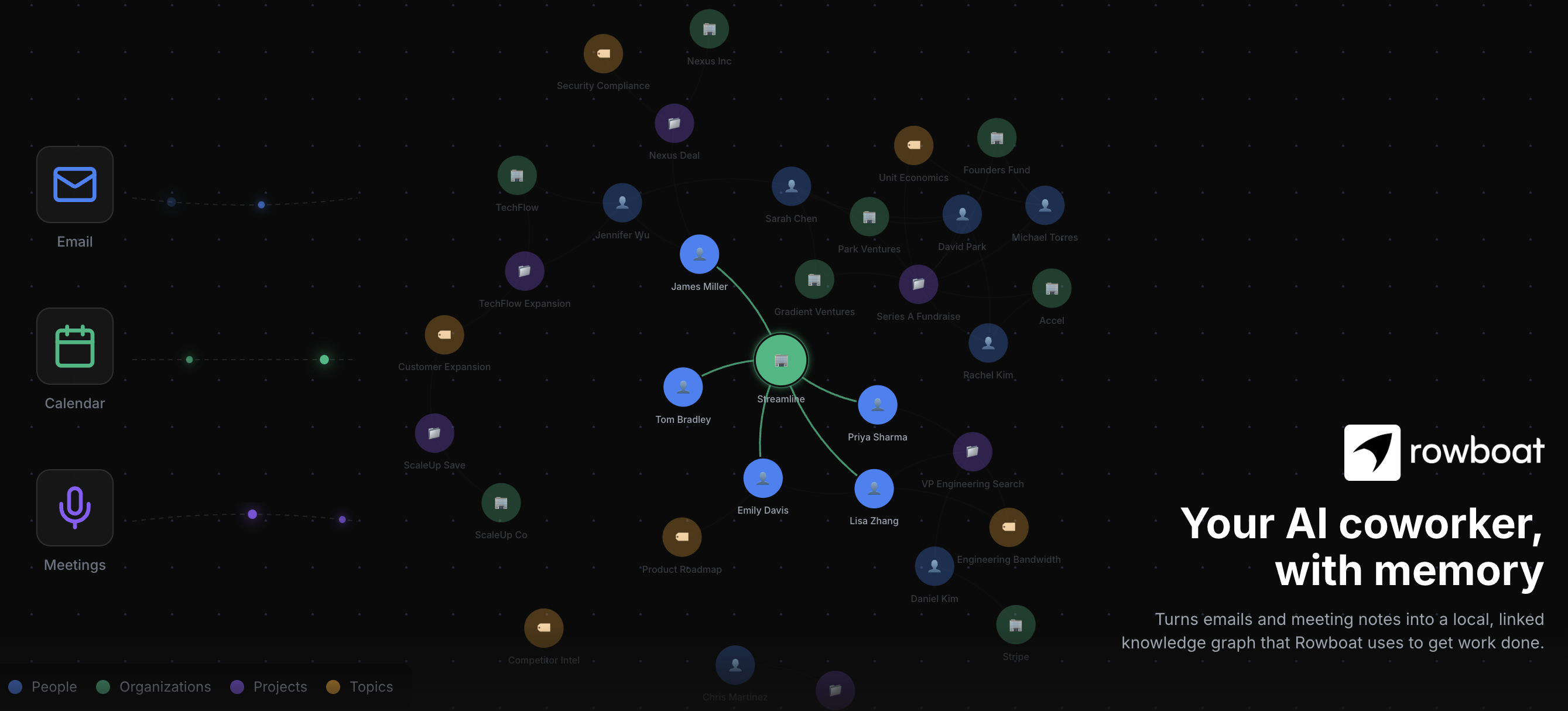
From the official repo and a recent deployment walkthrough, Rowboat is an open‑source AI coworker that:
- connects to email + meeting notes
- builds a knowledge graph over time
- generates real artifacts: briefs, emails, docs, PDF slides
- stores everything locally in Markdown
This is not “search on demand.” It’s memory that accumulates.
Key Concepts That Make It Different
1) Long‑lived memory (knowledge graph)
Relationships are explicit and editable, not hidden in a model.
2) Local‑first storage
Everything lives in a Markdown vault you can inspect and back up.
3) Bring‑your‑own model
Use local models (Ollama/LM Studio) or hosted APIs—swap anytime.
4) Background agents
Automate recurring workflows (daily briefings, draft replies, updates).
5) MCP extensibility
Plug in tools like Exa, Slack, GitHub, Jira, and internal systems.

Practical Flow (from the guide)
- Meeting prep: extract decisions + open questions + related threads
- Email drafting: reply grounded in prior commitments
- Doc/slide generation: produce artifacts directly from memory
- Follow‑up tracking: decisions + owners + updates pushed back to the graph
💡 Innovation: The Insight
Why This Matters in Practice
Rowboat is not just a smarter retrieval tool. It changes the unit of work from documents to continuity. The longer you use it, the more it helps—because memory compounds.
For teams doing long‑running projects, this is the difference between:
- searching for context
- and working from context
A Minimal Adoption Checklist
1) Start with one data source (e.g., Gmail)
2) Define a vault structure (people, projects, decisions)
3) Enable one automation (daily brief or meeting prep)
4) Add MCP tools gradually (search, Slack, GitHub)
5) Audit and prune memory weekly
Why This Matters for AI × Games
Game studios run long arcs—live‑ops, narrative pipelines, balance changes. A local‑first memory system can turn “tribal knowledge” into a searchable, editable graph that survives team changes.

New Questions This Raises
- How do we measure “memory quality” over time?
- What does a game‑studio‑native knowledge graph look like?
- Can we combine Rowboat memory with CI/CD signals to capture technical decisions automatically?
References
1) Rowboat repo:
https://github.com/rowboatlabs/rowboat
2) Rowboat overview (Korean guide):
https://digitalbourgeois.tistory.com/m/2766