Review/Trends
𝟳 𝗠𝘂𝘀𝘁-𝗸𝗻𝗼𝘄 𝗦𝘁𝗿𝗮𝘁𝗲𝗴𝗶𝗲𝘀 𝘁𝗼 𝗦𝗰𝗮𝗹𝗲 𝘆𝗼𝘂𝗿 𝗗𝗮𝘁𝗮𝗯𝗮𝘀𝗲 by ByteByteGo
Curiosity: How can we scale databases to handle growing workloads? What strategies work best for different scaling scenarios?
7 Must-Know Strategies to Scale Your Database
Curiosity: How can we scale databases to handle growing workloads? What strategies work best for different scaling scenarios?
Database scaling is essential for handling growing data and traffic. Here are 7 must-know strategies to scale your database effectively.
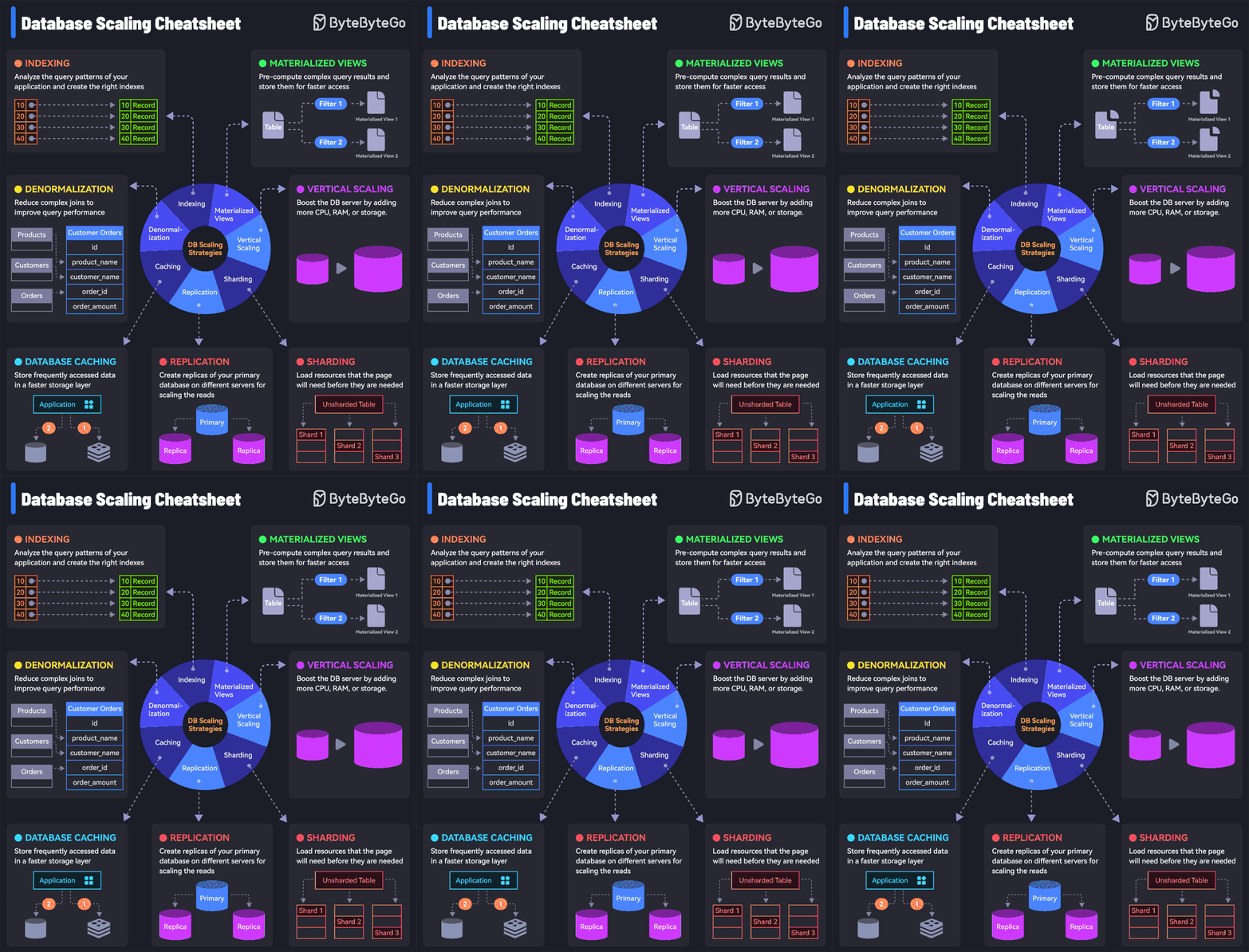
The 7 Scaling Strategies
Retrieve: Comprehensive scaling approaches.
| # | Strategy | Description | Use Case |
|---|---|---|---|
| 1 | Indexing | Create right indexes for query patterns | ⬆️ Query performance |
| 2 | Materialized Views | Pre-compute complex query results | ⬆️ Fast access |
| 3 | Denormalization | Reduce complex joins | ⬆️ Query speed |
| 4 | Vertical Scaling | Add more CPU, RAM, storage | ⬆️ Single server power |
| 5 | Caching | Store frequently accessed data | ⬆️ Reduce load |
| 6 | Replication | Create read replicas | ⬆️ Read scaling |
| 7 | Sharding | Split tables across servers | ⬆️ Write/read scaling |
Detailed Strategies
Innovate: Understanding each approach.
1. Indexing:
- Check query patterns of your application
- Create the right indexes
- Improves query performance significantly
2. Materialized Views:
- Pre-compute complex query results
- Store them for faster access
- Reduces computation time
3. Denormalization:
- Reduce complex joins
- Improve query performance
- Trade-off: Some data redundancy
4. Vertical Scaling:
- Boost database server
- Add more CPU, RAM, or storage
- Easier but has limits
5. Caching:
- Store frequently accessed data
- Use faster storage layer
- Reduces database load
6. Replication:
- Create replicas of primary database
- Deploy on different servers
- Scales reads effectively
7. Sharding:
- Split database tables into smaller pieces
- Spread across servers
- Scales both writes and reads
Scaling Strategy Comparison
Retrieve: When to use each strategy.
graph TB
    A[Database Scaling] --> B[Query Optimization]
    A --> C[Hardware Scaling]
    A --> D[Architecture Scaling]

    B --> E[Indexing]
    B --> F[Materialized Views]
    B --> G[Denormalization]

    C --> H[Vertical Scaling]
    C --> I[Caching]

    D --> J[Replication]
    D --> K[Sharding]

    style A fill:#e1f5ff
    style B fill:#fff3cd
    style C fill:#d1ecf1
    style D fill:#d4edda
Key Takeaways
Retrieve: Seven database scaling strategies (indexing, materialized views, denormalization, vertical scaling, caching, replication, sharding) address different scaling needs from query optimization to architecture changes.
Innovate: By combining these strategies based on your specific needs—query patterns, read/write ratios, and growth projections—you can effectively scale your database to handle increasing workloads.
Curiosity → Retrieve → Innovation: Start with curiosity about database scaling, retrieve insights from these seven strategies, and innovate by implementing the right combination of techniques for your database architecture.
Next Steps:
- Analyze your query patterns
- Choose appropriate strategies
- Implement scaling solutions
- Monitor performance