AI
SkillHub's Security Scanner Blocks on Crash, Not on Verdict
A commit-pinned audit of iflytek/skillhub: the scan verdict — even BLOCKED — gates no publish path in shipped code, while an unrecovered scanner outage hard-blocks the version.
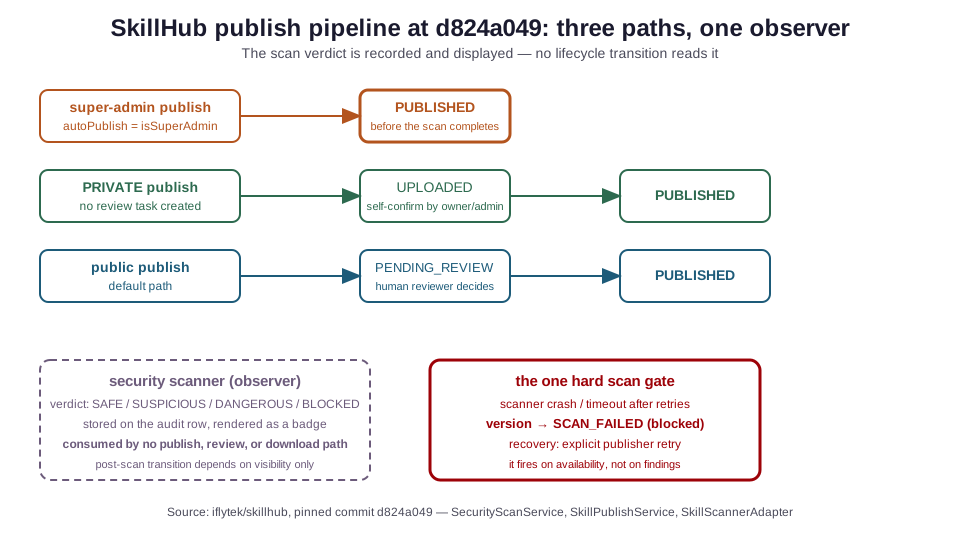
When a registry says “security scanning,” what does the verdict actually gate?
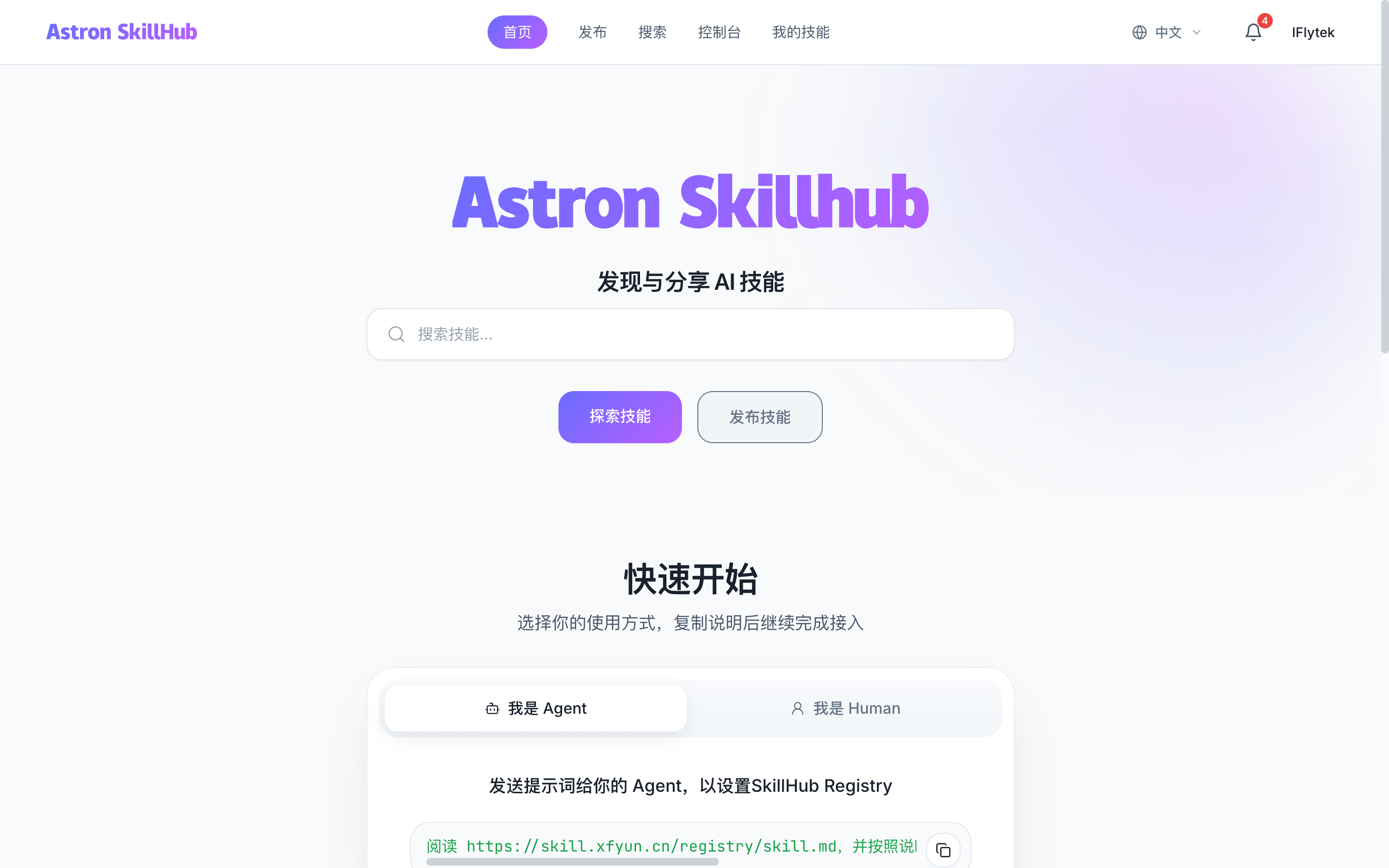
SkillHub is iFlytek’s self-hosted, enterprise agent-skill registry: publish and version skill packages, govern them with RBAC and audit logs, deploy behind your firewall. The repository is Apache-2.0, created 2026-03-11, and carried 5,072 stars with a last push on 2026-09-09 at retrieval. This audit pins the tree at commit d824a049.
Skill packages are executable instructions for agents — SkillHub’s own upload allowlist admits .sh, .py, .ps1, and fifteen other script and source types — so the registry’s security story matters more than its search box. SkillHub ships a real scanner integration: a local Docker build of Cisco’s skill-scanner, wired in through a Redis stream, with a verdict enum that ends in a value literally named BLOCKED.
So I asked the question I now ask every governance product: when the scanner returns that verdict, what changes? The answer, in the shipped code, is: the color of a badge.
Technical Analysis: Tracing the verdict from the scanner to nowhere
I audited the pinned tree through a shallow clone at d824a049 plus the GitHub API. Every quote below carries its file coordinate; nothing in this section comes from running the server.
The verdict pipeline is real — until the last step
SecurityVerdict.java defines exactly four values: SAFE, SUSPICIOUS, DANGEROUS, BLOCKED. The adapter (SkillScannerAdapter.java, lines 83-95) maps the external scanner’s response onto them: is_safe=true becomes SAFE, and a maxSeverity of CRITICAL becomes BLOCKED, HIGH becomes DANGEROUS, MEDIUM and anything unrecognized become SUSPICIOUS.
Then comes SecurityScanService.processScanResult. It stores the verdict on the audit record (line 184) — and advances the version by requested visibility alone: PRIVATE goes to UPLOADED (line 200), everything else to PENDING_REVIEW (line 202). No branch in the method reads the verdict when choosing the next status. A package the scanner just labeled BLOCKED and a package it labeled SAFE land in exactly the same place.
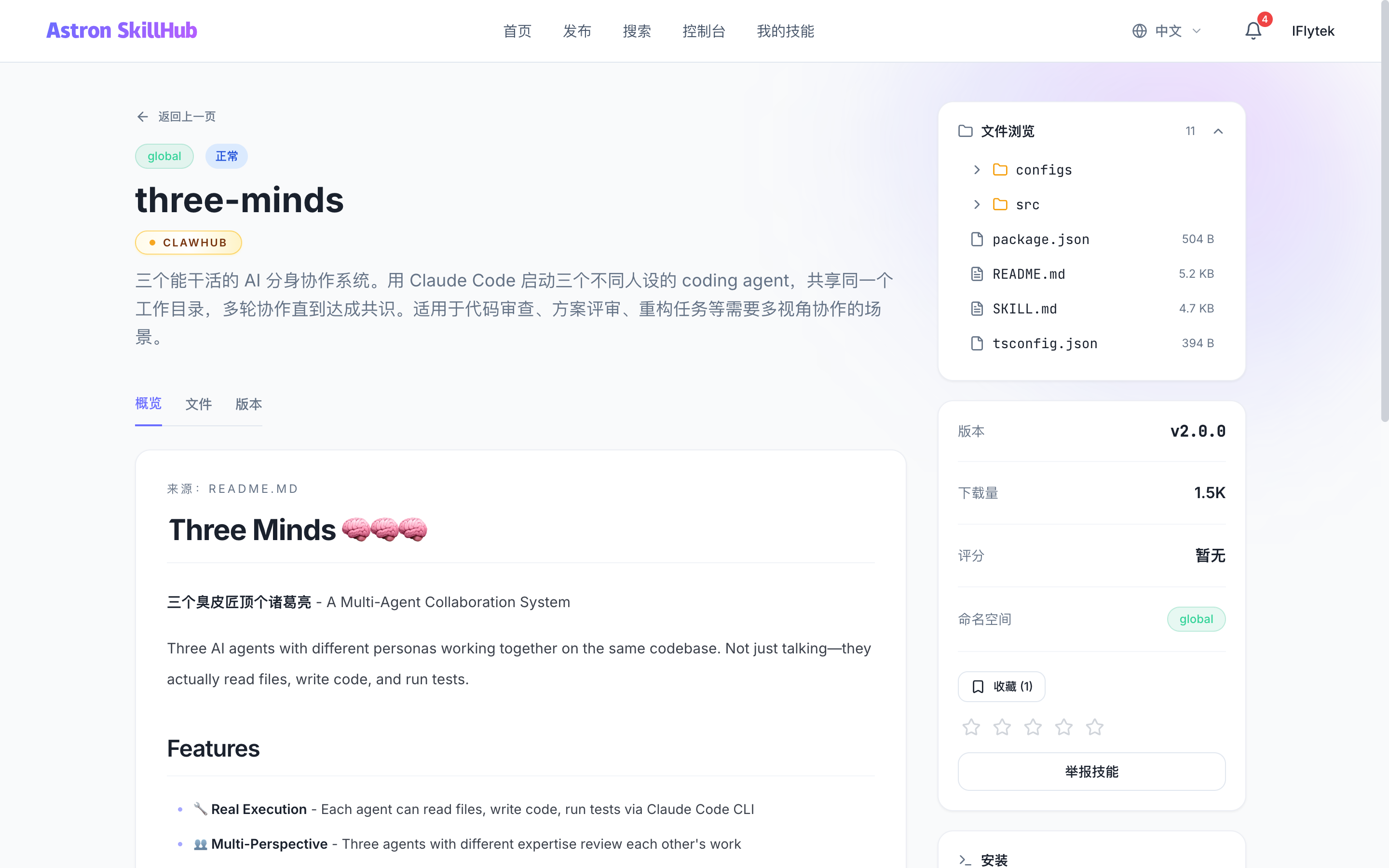
Is the verdict consumed anywhere else? In the non-test Java sources at this commit, a word-boundary grep for SecurityAudit finds only the JPA repository, a read-only portal controller, the scan service itself, and the entity and repository classes; a broader substring grep adds just the response DTO and a scan-retry service, neither of which reads the verdict to gate anything. ReviewService.java and PromotionService.java — the owners of review-approval transitions — contain zero references to verdict, isSafe, or SecurityAudit. So do SkillPublishService.java, SkillDownloadService.java, and the private-skill confirm flow. Beyond storage and that read-only audit API, the only remaining consumer is the display layer: web/src/features/security-audit/ ships a verdict-badge.tsx. One adjacent surface goes further than ignoring the verdict: the ClawHub-compatible registry facade answers every skill response with a hardcoded clean moderation record — verdict: "clean", isSuspicious: false, isMalwareBlocked: false — without consulting the stored audit at all (ClawHubRegistryFacade.java:108).
The scanner is an observer. Reviewers can read its report; no machine gate acts on it — and one compat surface affirmatively reports clean regardless of it.
The documentation promises the gate the code doesn’t have
The English scanner guide (docs/skillhub/en/guide/scanner.md) makes both claims on one page. Line 14 advertises a “Configurable severity level at which publication is automatically blocked.” Line 71 documents SKILLHUB_SCANNER_FAIL_ON_SEVERITY as “Severity level for automatic blocking,” default high. And line 96, in the Notes section, states plainly: “Scanning Does Not Block Publishing: Security scanning runs asynchronously and does not block the skill package upload process.”
The honest sentence is line 96. fail-on-severity exists in application.yml (default high) and is forwarded to the external scanner, where it can shape the computed is_safe — but since nothing downstream consumes the verdict, “automatic blocking” describes no shipped behavior. Line 7 of the same guide quietly concedes the real design: “The scan results inform review decisions.”
This is a familiar failure shape: when an enforcement behavior is implicit, documentation tends to invent the missing switch. Here the invented switch even has a real config key — it just never reaches a lifecycle transition.
The inversion: the gate fires on availability, not on findings
There is one place a scan hard-blocks a version: when the scan itself fails permanently. Transient scanner outages are deliberately held pending — application.yml’s own comment says availability failures “are reclaimed later instead of moving the skill to SCAN_FAILED”, with three retry attempts and a one-hour recovery window by default. But once that window is exhausted, SecurityScanService.processScanFailure marks the version SCAN_FAILED (line 165), and recovery is an explicit publisher retry — retryStoredBundleScan throws unless the scanner is enabled and the version is in SCAN_FAILED.
Read that against the previous section: a scanner that finds a critical threat changes nothing about the version’s path, but a scanner that stays unavailable past its recovery window stops the release until someone retries. The gate is wired to infrastructure health, not to security findings.
The failure documentation has drifted, too. scanner/docs/failure-impact-analysis.md promises automatic degradation to human review on scan failure, and quotes a markFailed() implementation — attributed to ScanTaskConsumer.java:104-119 — that saves a ReviewTask. The shipped ScanTaskConsumer.markFailed() calls processScanFailure() and contains no ReviewTask reference; a grep across the scan-failure path finds none. The documented safety net was removed from the code and survives only in the document.
Two publish paths never meet a reviewer at all
SkillPublishService (line 468) computes autoPublish = forceAutoPublish || isSuperAdmin. An auto-published version is set directly to PUBLISHED with a publish timestamp; at this commit, forceAutoPublish has no production caller, so being a super admin is the live trigger. The scan service even accounts for it: persistScanAttempt only moves a version to SCANNING “if the version is not already published (auto-publish flow)” — its own comment. A super admin’s package is live before its scan completes.
PRIVATE skills take the second path: straight to UPLOADED with the in-code comment “PRIVATE skill goes to UPLOADED status, no review task created,” then to PUBLISHED by self-confirmation — the confirm flow requires only that the actor is the skill owner or a namespace admin/owner, and contains no scan or verdict checks. The blast radius is bounded: SkillDownloadService restricts UPLOADED and PENDING_REVIEW downloads to users who can manage the draft, and private distribution stays namespace-scoped. But inside that scope, no scanner verdict and no independent reviewer ever stands between a publisher and their audience.
And the quickstart makes the strongest path the default one. The README’s zero-config deploy is a pipe-to-shell of runtime.sh; the release template it relies on ships BOOTSTRAP_ADMIN_ENABLED=true with the documented password ChangeMe!2026, and BootstrapAdminInitializer assigns that account SUPER_ADMIN. The README does tell operators to change the password and notes that validate-release-config.sh rejects the default — but the in-repo scripts/runtime.sh at this commit never invokes that validation; it lives in a separate make target. (The quickstart actually pipes a remote copy of runtime.sh from a cloud-storage bucket, which this commit cannot pin at all.) The advertised quickstart boots a registry whose default account publishes straight to PUBLISHED.
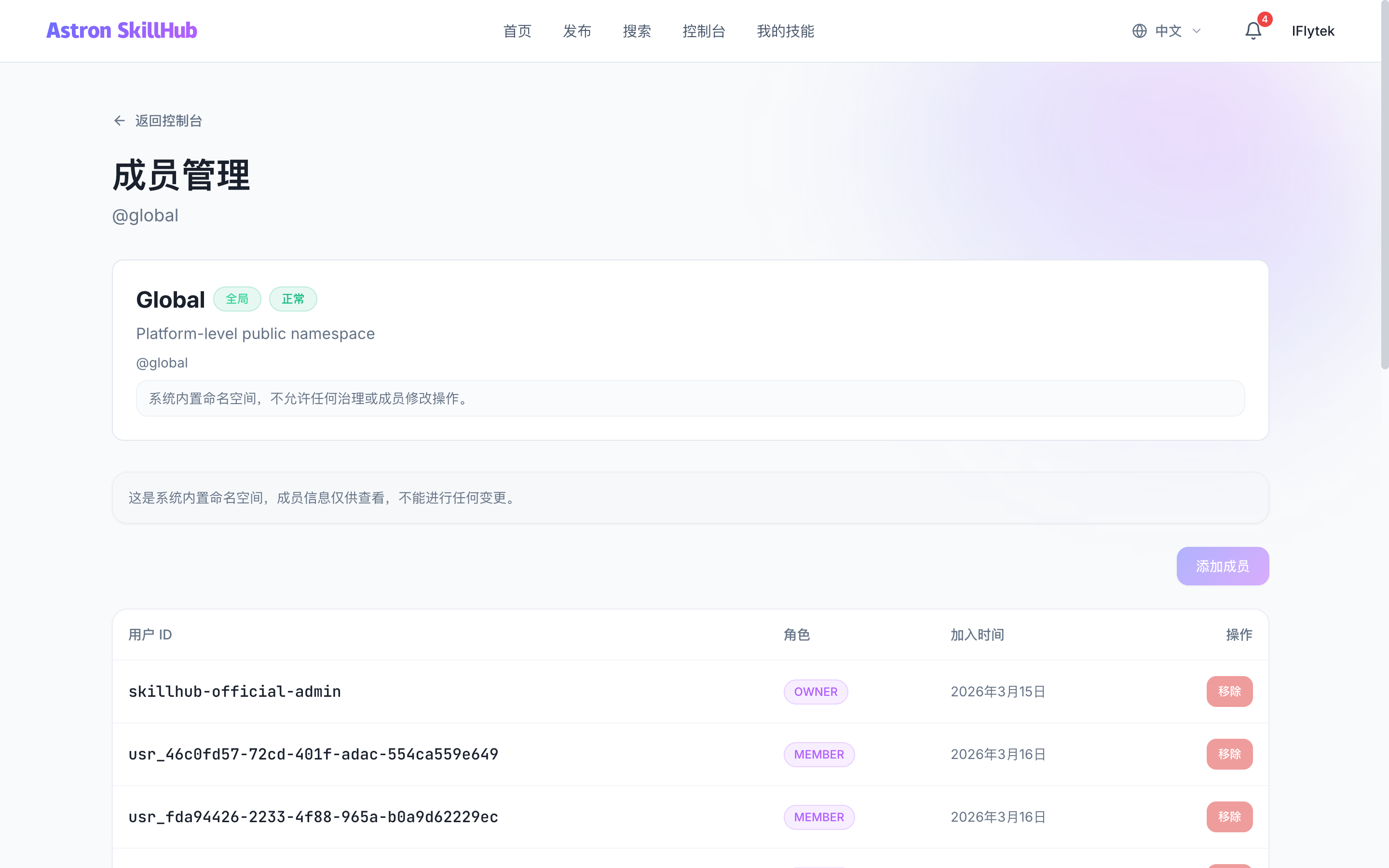
What the deterministic gate actually checks
The enforcement that does exist at upload time is SkillPackagePolicy: 500 files max, 10 MB per file, 100 MB per package, and an extension allowlist. The allowlist is honest about what skills are — it admits eighteen script and source types alongside docs and images. Its content validation, though, is thin at the edges: magic-byte checks cover images and PDF, a UTF-8 check covers text types, and the six office formats (.doc, .xls, .ppt, .docx, .xlsx, .pptx) have no branch at all — any byte content under an office extension passes the deterministic gate. And per the README, the SKILLHUB_PUBLISH_ALLOWED_FILE_EXTENSIONS override “replaces the default allowlist instead of appending to it” — one environment variable swaps the whole list.
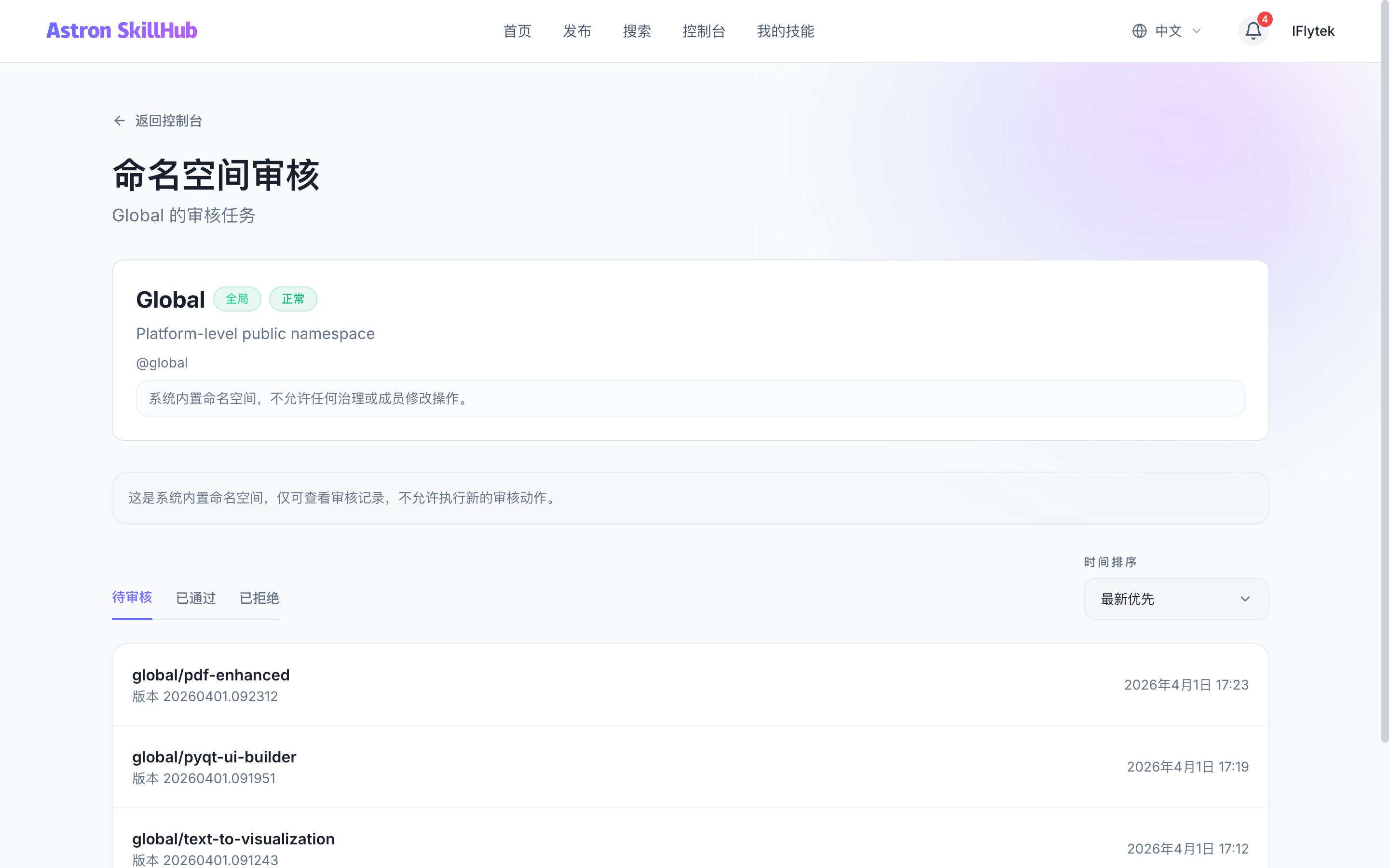
Advertised versus shipped, layer by layer
| Layer | What the docs say | What the pinned code does |
|---|---|---|
| Scan verdict | “publication is automatically blocked” at fail-on-severity | Stored on the audit row, rendered as a badge; read by no lifecycle code |
| Scan failure | Auto-degrade to human review (failure-impact doc) | SCAN_FAILED hard block until an explicit publisher retry |
| Public publish | Reviewed under governance | PENDING_REVIEW and a human decision — real, but not bound to the verdict |
| Private publish | Namespace-governed | UPLOADED, then self-confirmation by owner or namespace admin |
| Super-admin publish | (not advertised) | PUBLISHED before the scan completes |
| Upload gate | Extension allowlist | Magic bytes for images/PDF, UTF-8 for text, no check for office formats |
Grade the scanner by its consumers, not its engines
To be fair to SkillHub: asynchronous, advisory scanning is a defensible design. Blocking uploads on a scanner adds a hard availability dependency — and SkillHub’s own engineering shows they take that dependency seriously (idempotency locks, bounded retries, temp-file cleanup discipline in ScanTaskConsumer). Routing every public skill through human review is a real gate, and bounding pre-review downloads to draft managers is real too. The defect is narrower and more instructive: the product documents an enforcement behavior — “automatically blocked” — that terminates in a badge.
What I take away for evaluating any registry or governance product:
- Trace the verdict, not the engine list. The engine table is where drift already lives: the guide marks metadata analysis “Enabled” and behavioral analysis “Optional”, while default configuration at this commit enables behavioral analysis only — the exact inverse. The security property lives in who consumes the result. One grep — “who reads this enum?” — settled more than the whole scanner docs page.
- Ask what happens when the scanner is down, and when it is loud. Here, staying down blocks and loud doesn’t. If those two answers are inverted from your expectation, the “security scanning” checkbox is measuring uptime, not threats.
- Enumerate the paths that skip the gate. Super-admin instant publish and private self-confirmation are both legitimate product features — until your threat model includes a compromised admin account that the quickstart shipped with a documented default password.
- Doc drift concentrates in safety claims. Both drifted documents here — “automatic blocking” and “auto-degrade to human review” — describe protections. Feature docs get corrected by annoyed users; safety docs fail silently until someone audits them.
For the harness-side view of the same question — where an allow list runs relative to your own deny rules inside one agent runtime — see my OpenHarness permission-order audit: it maps the enforcement-order problem this registry audit meets one layer up. The catalog-scale cost of skills inside a harness is in the ECC context-tax audit.
Key Takeaways
- SkillHub’s scan verdict gates nothing in shipped code. The enum ends in
BLOCKED;processScanResultadvances versions by visibility alone, and no publish, review, promotion, or download path reads the verdict. It renders as a frontend badge. - The only hard scan gate fires on failure, not on findings. A scan that stays failed past its bounded recovery window puts the version in
SCAN_FAILEDuntil an explicit retry; aDANGEROUSverdict changes nothing about the version’s path. - Two publish paths bypass review entirely — super-admin instant publish (live before the scan completes) and private self-confirmation — and the quickstart’s release template ships a
SUPER_ADMINaccount with a documented default password, while the in-repo deploy script never runs the validation that would reject it. - Safety documentation drifted twice: “automatic blocking” describes no shipped behavior, and the failure-analysis doc quotes a review-degradation code path that no longer exists.
- The real enforcement layers are the upload allowlist (thin at office-format edges), mandatory human review for public skills, and namespace-scoped RBAC.
New Questions
- The
fail-on-severitykey is forwarded to the Cisco scanner where it shapesis_safe— did an earlier SkillHub version consume the verdict, and if so, which commit disconnected it? - The scanner supports optional LLM analysis of untrusted skill content. When that judge is an LLM reading attacker-authored
SKILL.mdfiles, what does a prompt-injection-shaped skill package do to the verdict distribution? - ClawHub-compatible clients can search and install against a SkillHub registry, and the compat facade already reports every package as moderation-clean. Do any ClawHub-style clients make trust decisions from that hardcoded field, and would they behave differently if it carried the real verdict?
Limitations
- This is a static audit of the pinned tree
d824a049plus GitHub API metadata. I did not run the server, the scanner container, or any end-to-end publish, so runtime behaviors beyond the quoted code paths are out of scope. - The Cisco skill-scanner’s own detection quality is not assessed here; only its integration contract with SkillHub is.
- Negative claims (“no consumer of the verdict”) are scoped to the non-test Java sources at this commit, verified by whole-tree grep; the external scanner service and future commits are outside that scope.
- The failure-impact document may simply predate the current implementation; the finding is the current mismatch, not an intent judgment.
- Star, fork, and push figures are point-in-time API reads and drift daily.
References
Primary sources
- iflytek/skillhub, pinned tree at d824a049
- SecurityScanService.java — verdict storage and visibility-only transitions
- SecurityVerdict.java — the four-value enum
- SkillScannerAdapter.java — severity-to-verdict mapping
- SkillPublishService.java — autoPublish and visibility routing
- SkillPackagePolicy.java — allowlist and content-signature checks
Documentation audited
- English scanner guide — the “automatic blocking” / “Scanning Does Not Block Publishing” page
- Scanner failure-impact analysis — the drifted review-degradation claim
- scanner/README.md — Cisco skill-scanner integration
- Repository README — quickstart, bootstrap admin, allowlist override
Related coverage on this site
Editorial method: claims in this article point to primary documentation, pinned source code, runnable checks, or dated measurements, with AI-assisted research under the site's evidence-gated policy. How this site verifies claims and discloses AI assistance · Report a correction.
Working on something like this?
I take a small number of paid, scoped reviews: AI agent/RAG architecture diagnosis, Unity CI & build-automation audits, and multimodal QA design review. Each one ends in a written findings document.
Work with me