AI
CAO's Honest Trust Boundary and Its Phantom Auth Switch
A commit-pinned audit of awslabs/cli-agent-orchestrator 2.5.0: the docs name the real trust boundary in plain text, and four references cite an auth switch no code reads.
When twelve AI CLIs share one machine, what separates them?
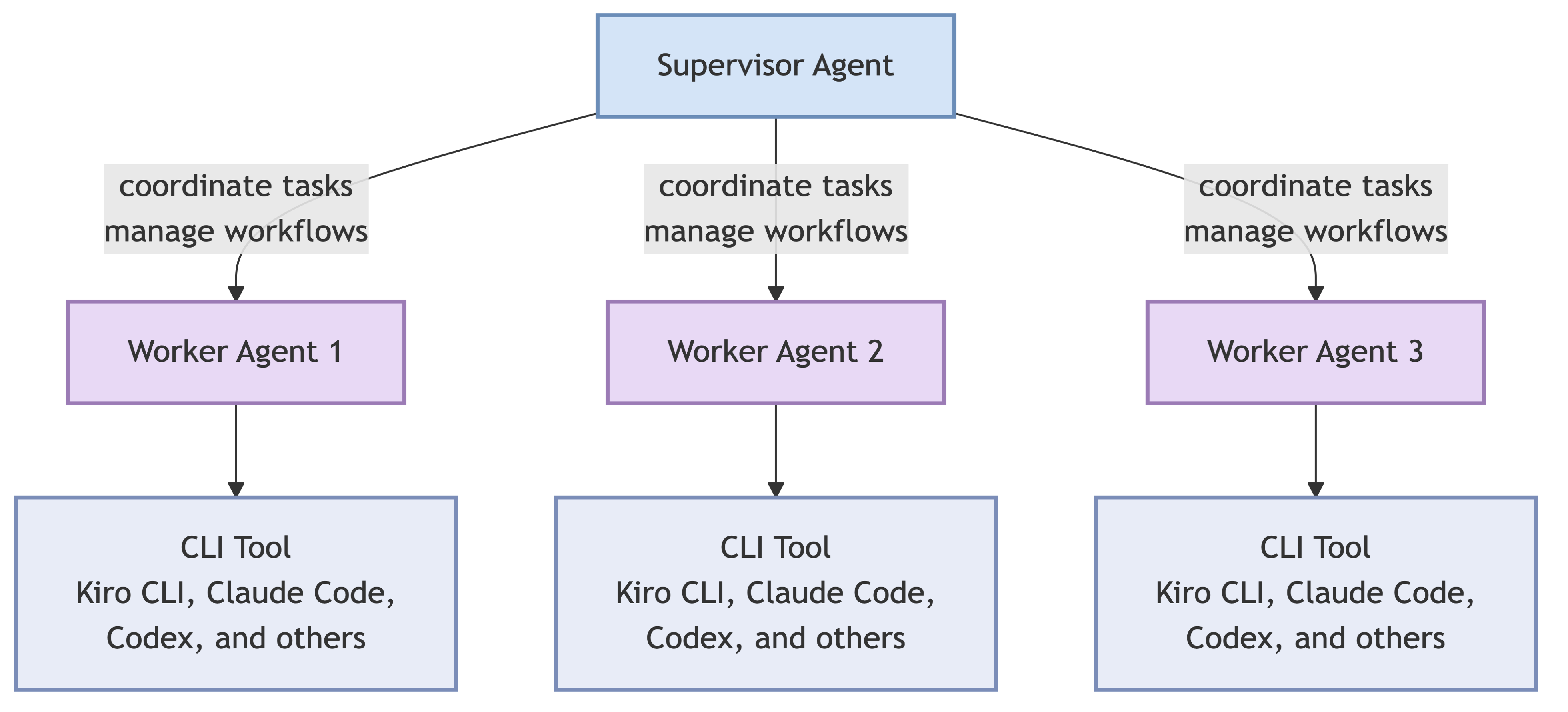
CLI Agent Orchestrator (CAO) is the awslabs project that coordinates AI coding CLIs — its prerequisites list links twelve provider guides, from Kiro CLI and Claude Code to Codex, Cursor, and Grok Build — so a supervisor agent can delegate work to specialist workers. The repository is Apache-2.0, created 2025-07-29, and carried 1,238 stars with a last push on 2026-09-08 at retrieval. This audit pins the tree at commit ce18db23, whose pyproject.toml declares version 2.5.0.
The README makes a specific promise: CAO “runs a local cao-server, starts provider CLIs in isolated terminal sessions”, while “the agents remain full CLI processes with their native authentication and capabilities.” My previous audit, Ouroboros preaches agency and ships owner-first custody, asked who holds authority over one self-modifying agent. An orchestrator multiplies the sharper question: when several full CLI processes (CAO supports twelve providers) run under one OS user on one machine, what actually separates agent from agent — and which of the shipped defenses would notice if one of them turned hostile?
So I read the security surface of the pinned tree end to end: the auth core, the scope decorators, the network constants, the WebSocket PTY contract, the fleet example, and the boundary-naming docstrings along those paths. The tree answers the question in plain text. It also cites, in four separate places, an auth switch that no executable code reads.
Technical Analysis: Classifying every defense as enforcement, UX gate, or prose
I audited the pinned tree through a shallow clone at ce18db23 plus the GitHub API. Every quote below carries its file coordinate; nothing in this section comes from running the server.
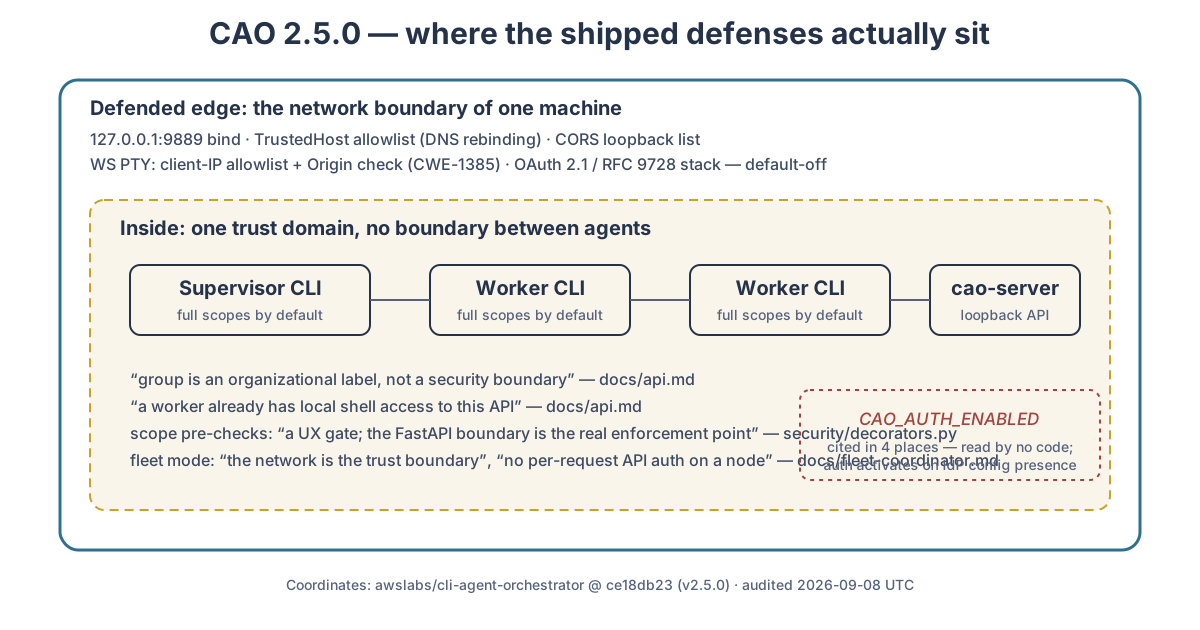
The defended edge is the network, and the code says so
The API server binds 127.0.0.1:9889 by default (constants.py, lines 362-363). Around that loopback bind sits genuinely careful engineering: a TrustedHostMiddleware Host-header allowlist annotated as DNS-rebinding mitigation, a fixed loopback CORS list, and a WebSocket PTY endpoint whose comments cite CWE-1385 by number — “the handler must validate Origin itself or any web page the victim visits can drive the local PTY” (constants.py, lines 490-493). When authentication is enabled, the JWKS cache serves stale IdP keys across outages only up to a hard 24-hour bound — “Past it the keys are considered too stale to trust… so validation fails closed”; tokens are RS256-only with issuer and audience pinning, and the audience check falls back to the advertised resource identifier “so audience verification is never silently disabled” (security/auth.py).
That is not checkbox security writing. Someone thought about key rotation during outages, about cross-site WebSocket hijacking, about DNS rebinding — the classes of bug that only hurt you in production.
Inside the edge, the docs refuse to pretend
The same tree is equally deliberate about what it does not defend. The auth core’s module docstring opens with the posture: it is “default-off: with AUTH0_DOMAIN unset and CAO_AUTH_JWKS_URI unset, every authorization path returns the full scope taxonomy and no enforcement happens — behavior is byte-for-byte identical to a build with no auth layer” (security/auth.py, lines 4-7). The scope decorator calls itself “a UX gate; the FastAPI Depends(get_current_scopes) boundary is the real enforcement point” (security/decorators.py, lines 5-6) — and when the optional local token fails validation, the pre-check logs a warning and returns the full scope set, deferring to that boundary by design.
The API reference states the consequence outright (docs/api.md, lines 192-196):
“
groupis an organizational label, not a security boundary. On a default install with auth disabled, a worker already has local shell access to this API, sogroup/discovery/session-scoping provide no tenant isolation or access-control guarantee even used together — do not build a security boundary on top of them.”
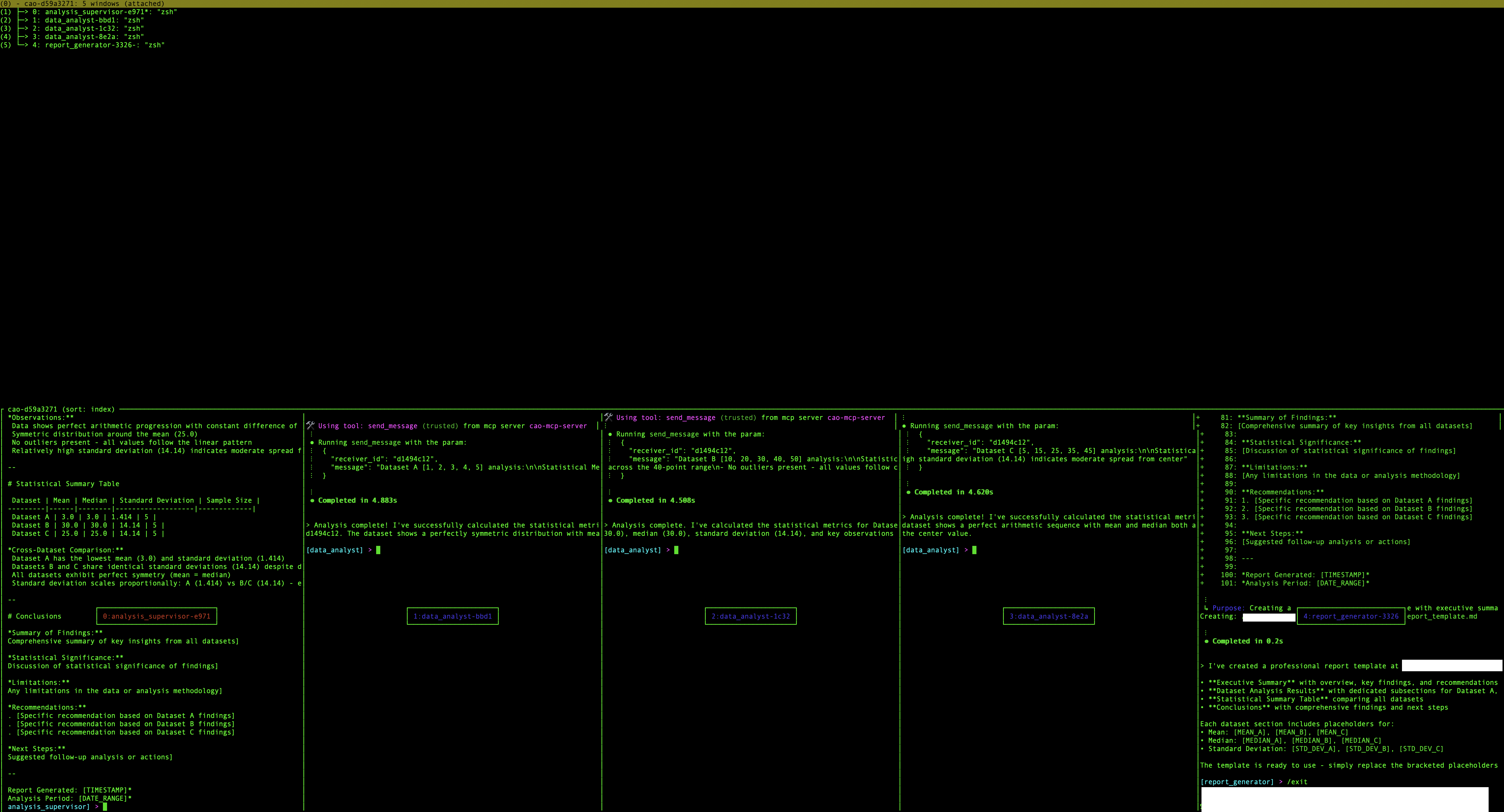
Read that against the README’s “isolated terminal sessions”. The isolation is real as workspace separation — each provider CLI gets its own tmux session — but it is presentation-level, not privilege-level. Every agent is a full process under the same OS user, and the docs state plainly that any of them can drive the orchestration API that controls all the others.
The unauthenticated surfaces are documented with the same directness. The WebSocket PTY comment block: “The WebSocket endpoint provides unauthenticated PTY access, so this list is deliberately tight” (constants.py, lines 474-475) — the list being a loopback client-IP allowlist. The API docs confirm the consequence: “With authentication disabled, clients that also pass the Origin check receive full PTY read/write access.” And the workflow run-inspection route carries a docstring that reads like an audit of itself: the retained step output “is INERT in the default deployment… A local CAO server therefore serves step output and error text to any caller that can reach the port”, a posture it labels “deliberately documented rather than further gated” (api/main.py, lines 5155-5162).
Fleet mode extends the boundary — and the candor
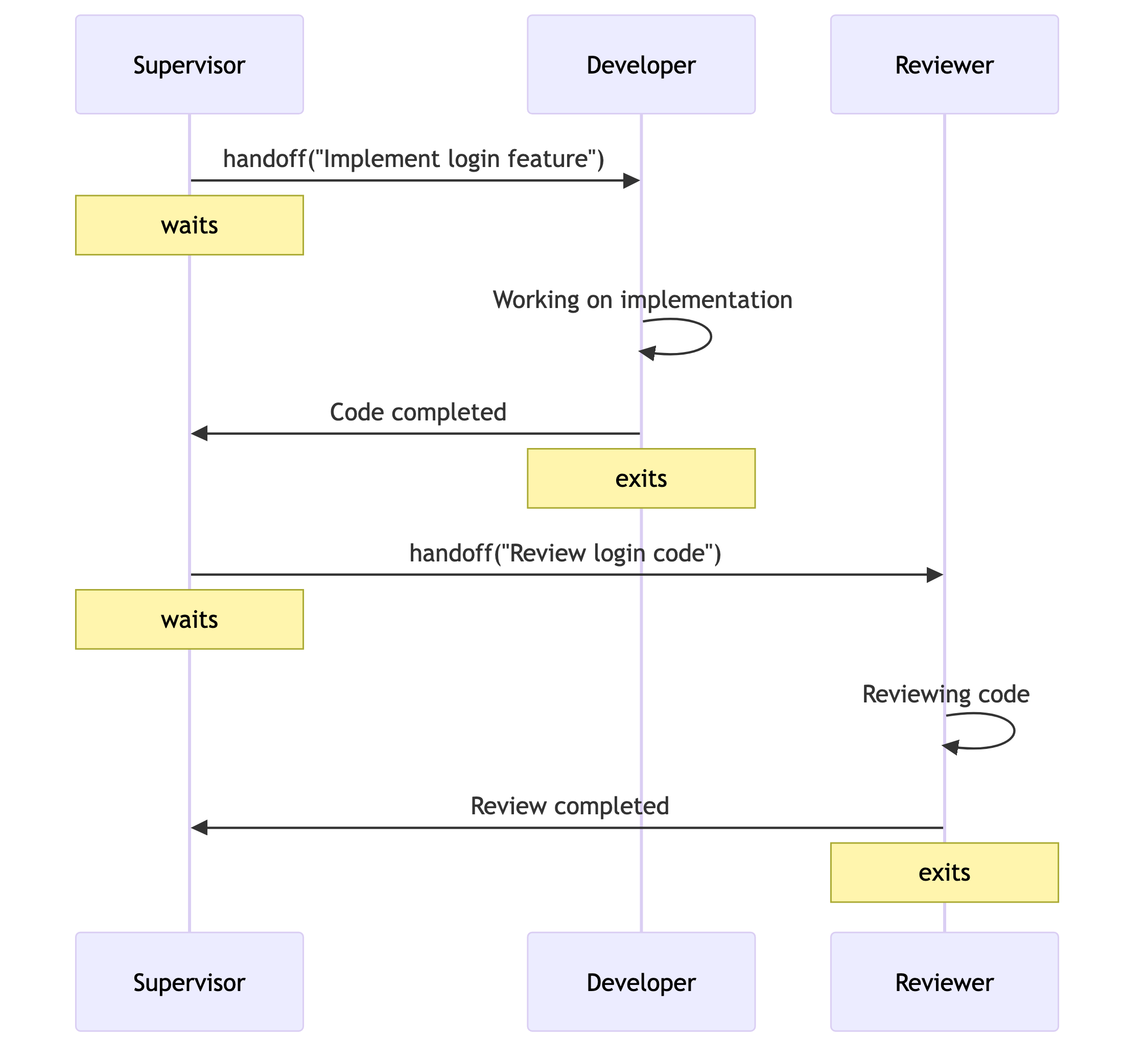
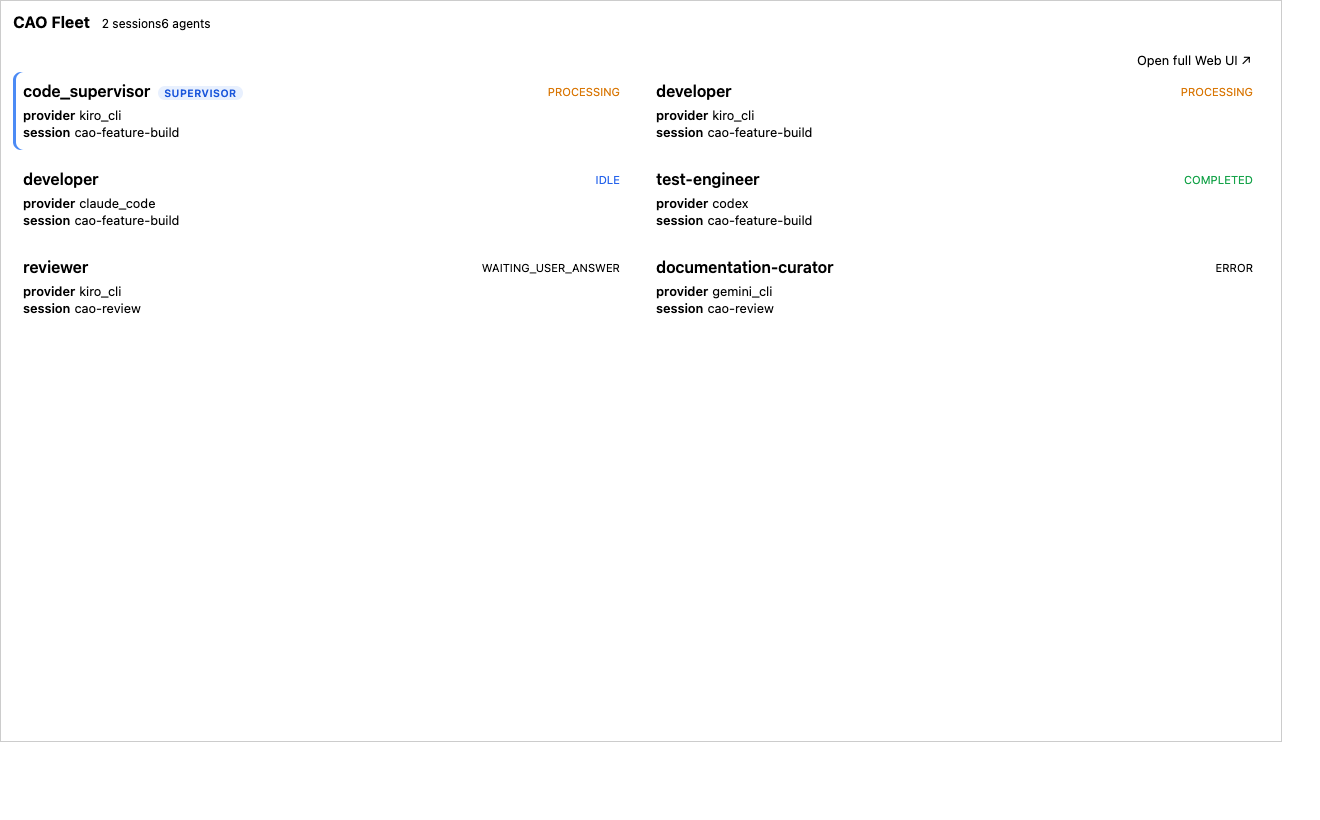
The fleet-coordinator example scales CAO across machines, and its security section opens with a bold warning callout (docs/fleet-coordinator.md, lines 250-277):
“A node’s
cao-serveris an unauthenticated command-execution surface. Anyone who can reachhost:portcan launch and drive agents on that node — that is full command execution. The private network is the only thing protecting it.”
It continues: “The network is the trust boundary”, there is “no per-request API auth on a node” in the example, and “CAO_ALLOWED_HOSTS is not authentication” — it is a Host-header allowlist, not peer auth. The document even flags its own bootstrap hazard: the bind-address fallback chain ends at the default-route IP, which on a cloud host without a private route “would bind the unauthenticated cao-server to a public IP”. The panel gets opt-in token auth; “the nodes don’t.”
The switch that exists only in prose
Here is the finding this audit adds. The canonical configuration section gets activation right: “Auth activates only when CAO_AUTH_JWKS_URI (or AUTH0_DOMAIN) is set” (docs/configuration.md, line 253) — and it warns that the auth.* keys in settings.json “are schema-only and have no runtime effect yet.”
But a whole-tree grep for CAO_AUTH_ENABLED returns exactly four hits, all prose: docs/api.md:256 (“With CAO_AUTH_ENABLED unset — the default — that check is inert”), docs/configuration.md:171, and two docstrings in api/main.py (lines 5132 and 5157). No executable code in the pinned tree reads a CAO_AUTH_ENABLED environment variable. The only reads that activate authentication are os.getenv("AUTH0_DOMAIN") and os.getenv("CAO_AUTH_JWKS_URI") in security/auth.py.
The failure mode writes itself. An operator who lands on the workflow-reads paragraph or the retention warning — both operator-facing documents — learns the name of a boolean kill-switch. Setting CAO_AUTH_ENABLED=1 produces no error, no warning, and no authentication: environment variables that nothing reads are ignored silently. The operator’s mental model says auth is on; the server’s behavior is byte-for-byte the no-auth build. The drift is doubly instructive because both drifted documents sit within 100 lines of correct text: configuration.md line 171 contradicts its own canonical auth section at line 253.
I read this as a naming symptom of a design choice, not carelessness. CAO made “auth on” an emergent property of configuration presence — there is no boolean to name, so writers who need one invent it. The very fact that the four references agree on the same invented name suggests they were written against a mental model of a switch the architecture deliberately avoided shipping. Notably, the pinned HEAD commit itself is “docs: clarify PTY WebSocket authorization (#749)” — this documentation surface is under active, same-day maintenance, which makes the surviving phantom references more interesting, not less: prose drift outlives even attentive editing when the name it drifts toward is more intuitive than the mechanism.
The deny-list at the shared-memory tier
One more boundary deserves its classification. Writes to the machine-wide shared memory tier pass a credential gate, and the module describes itself honestly: “This is a heuristic deny-list, not entropy scoring; it errs toward catching common credential shapes” (services/secret_gate.py, lines 9-12). Six named regexes — AWS key IDs, PEM headers, bearer/api-key/token assignments, password assignments, GitHub and GitLab PATs. A deny-list by shape will miss credentials whose names and formats fall outside those six families; the module does not claim otherwise, and the scoping (reject-on-write for the federated tier only) is proportionate to what a regex gate can honestly promise.
What this classification is worth in production
The audit yields a three-way classification that transfers to any orchestrator you evaluate:
| Defense in the pinned tree | Class | Coordinate |
|---|---|---|
| Loopback bind, TrustedHost, CORS list | Enforcement (network edge) | constants.py 362-363, ALLOWED_HOSTS |
| WS PTY client-IP allowlist + CWE-1385 Origin check | Enforcement (network edge) | constants.py 474-497 |
| OAuth 2.1 scope checks on API routes | Enforcement only when IdP config present; otherwise inert | security/auth.py 4-7 |
requires_scopes decorator, local-token pre-check | UX gate by its own label; fails open to the FastAPI boundary | security/decorators.py 5-6 |
group/discovery/session scoping | Organizational labels; explicitly not security | docs/api.md 192-196 |
| Fleet node API | No per-request auth; network is the boundary | docs/fleet-coordinator.md 250-260 |
| Shared-memory credential gate | Heuristic deny-list, six shape families | services/secret_gate.py 9-12 |
CAO_AUTH_ENABLED | Prose only — read by no code | grep: 4 hits, all docs/docstrings |
Three decisions follow for anyone running CAO or a similar orchestrator:
- Treat co-located agents as one trust domain, because the vendor does. CAO’s docs say a worker already has local shell access to the API. If your threat model includes a prompt-injected worker, the separation you need is OS users, containers, or per-node network segmentation — not
grouplabels. This is the operator-side complement of the custody question in the Ouroboros audit: there the agent’s authority over itself was the risk; here it is each agent’s authority over its siblings. - If you enable auth, verify the activation mechanism against code, not docs. The real switch is IdP-config presence. After setting it, confirm enforcement behaviorally — an unauthenticated request to a scoped route should return 401, the pattern openharness’s permission ordering taught: the order and existence of checks is only trustworthy once observed.
- Audit your own docs for phantom switches. The generalizable lesson is that activation-by-presence breeds invented booleans. If your system’s security posture is an emergent property of configuration, either ship the explicit boolean people keep reaching for, or grep your docs for the boolean they will invent.
Limitations
This is a static audit of one pinned commit plus its documentation; I did not run cao-server or verify route behavior dynamically, so behavioral statements above rest on the quoted code and docstrings rather than on observed traffic. The CAO_AUTH_ENABLED finding is scoped to environment-variable reads in the pinned tree ce18db23; the two api/main.py occurrences are internal docstrings where shorthand is more defensible than in the two operator-facing docs. The repository moves daily — the same-day HEAD was itself a security-docs clarification — so any coordinate here may have moved by the time you read it. Nothing in this audit is a vulnerability report: every posture described is documented by the project itself, and the phantom switch is documentation drift, not an exploitable flaw.
Key Takeaways
- CAO defends the network edge and says so: loopback bind, TrustedHost, CWE-1385 Origin validation on the PTY WebSocket, and an RS256-only OAuth 2.1 layer with a fail-closed 24-hour JWKS staleness bound — when an IdP is configured.
- Inside the edge there is one trust domain: auth is default-off with full scopes for every caller,
groupis “not a security boundary”, scope pre-checks are self-described “UX gates”, and each fleet node is “an unauthenticated command-execution surface” guarded by private networking. - Four references teach a switch that does not exist:
CAO_AUTH_ENABLEDappears in two operator docs and two docstrings, but no code in the pinned tree reads it — auth activates onAUTH0_DOMAIN/CAO_AUTH_JWKS_URIpresence, and setting the phantom variable fails silently. - Activation-by-presence breeds invented booleans: when “security on” has no named flag, documentation converges on one anyway — grep your own docs for the switch your writers will invent.
New Questions
- Would an explicit
CAO_AUTH_ENABLEDboolean (validated, erroring when set without an IdP) cost anything beyond one constant — and would upstream accept it as the cheaper fix over correcting four prose sites that drifted the same way? - What is the minimal per-agent privilege separation (OS users? rootless containers per provider CLI?) that preserves CAO’s tmux ergonomics while making
grouplabels coincide with an actual boundary? - How many other agent orchestrators document their agent-to-agent trust domain at all — is CAO’s candor the exception or the emerging norm?
References
Primary sources
- awslabs/cli-agent-orchestrator @ ce18db23 — pinned tree audited: README,
security/auth.py,security/decorators.py,constants.py,api/main.py,services/secret_gate.py,docs/api.md,docs/configuration.md,docs/fleet-coordinator.md - GitHub API: repository metadata — stars, forks, license, timestamps (retrieved 2026-09-08T16:06Z)
- Apache License 2.0 at the pinned commit
Standards and background
Related on this site
Editorial method: claims in this article point to primary documentation, pinned source code, runnable checks, or dated measurements, with AI-assisted research under the site's evidence-gated policy. How this site verifies claims and discloses AI assistance · Report a correction.
Working on something like this?
I take a small number of paid, scoped reviews: AI agent/RAG architecture diagnosis, Unity CI & build-automation audits, and multimodal QA design review. Each one ends in a written findings document.
Work with me