AI
Cloudflare OS simulates approvals, but never for MCP writes
Source Audit of Cloudflare OS at 5cae880e: approve-later simulation is per-Gatekeeper code; MCP writes are never simulated and pause the agent while a human decides.
Does the approve-later trick reach your MCP servers?
Cloudflare OS is Cloudflare’s open-source agent workspace: an agent chat, AI-built personal apps called Gadgets, and a guardrail layer called Gatekeepers. It is an Apache-2.0 repository created on April 15, 2026, and it had more than 10,000 GitHub stars when I checked on October 4, 2026.
The README’s most interesting claim is about human approval. It says that traditional human-in-the-loop setups make the human approve actions synchronously, and that Gatekeepers “implement a significant advancement in the state of the art”: when an agent performs an action that requires approval, the Gatekeeper will simulate the outcome locally, so the agent can keep going and the user can approve or reject the queued actions later, in bulk or one by one.
That is a real design idea. An agent that stops at the first approval and waits while you get coffee is the reason people reach for auto-approve. The same README also says “Gatekeepers are like supercharged MCP servers”, and Cloudflare’s launch post says Cloudflare OS supports the MCP servers your organization already uses via MCP Server Portals.
For teams that bring existing MCP servers instead of writing Gatekeepers, the question is narrow:
When a Cloudflare OS agent calls a write tool on an MCP server, does it get the simulated, approve-later experience the README describes?
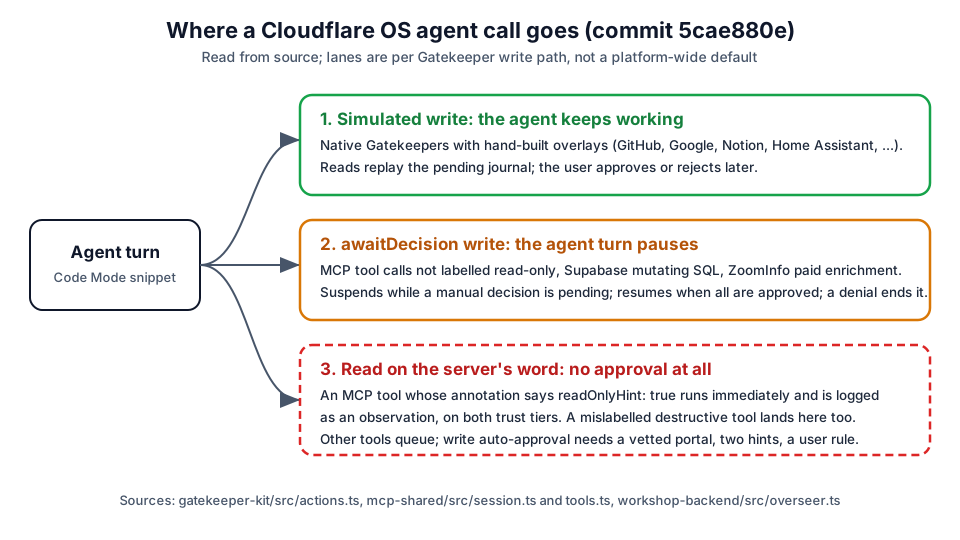
At the pinned commit, it does not. No MCP write is simulated. Every MCP tool call that is not classified as a read is flagged awaitDecision, so the agent’s turn pauses whenever a manual decision is pending, and a denial ends the turn. On a user-supplied MCP server, the only thing that lets a call skip approval entirely is the server’s own readOnlyHint label. The project documents these limits in package-level files. The top-level README does not.
Technical Analysis: What the pinned source says
I pinned the audit to commit 5cae880e, committed on October 2, 2026. I read the README, the shared approval toolkit in packages/gatekeeper-kit, the shared MCP code in packages/mcp-shared, the two MCP Gatekeepers, the Supabase and ZoomInfo Gatekeepers, the shared Gatekeeper interface, and the parts of the backend “overseer” that decide when an agent turn stops. Then I ran one local experiment on the MCP tool classifier.
How simulation actually works
Simulation is not a platform switch. It is a contract each Gatekeeper opts into. In the toolkit, every action definition declares a delivery of either "continue-with-simulation" or "await-decision", and the kit maps "await-decision" onto an awaitDecision: true flag on the action it submits.
The machinery behind the first option is careful. Pending actions live in an action journal stored on a Durable Object KV surface. Reads replay that journal in action-id order, and the replay helper returns an explicit "incomplete" result when it meets an effect it cannot project, rather than pretending. Objects the agent “created” get provisional ids, and an id that has not been bound to a real provider id is refused before it can reach the provider: the error reads “has not been created yet, so it cannot be used against the provider.”
Applying an approved action is at-least-once across activations unless a definition sets claimBeforeApply, and there is a dedicated ActionOutcomeUnknownError for calls that may already have taken effect. That matters because the journal lives in Durable Object storage, and a Durable Object does not stay in memory forever.
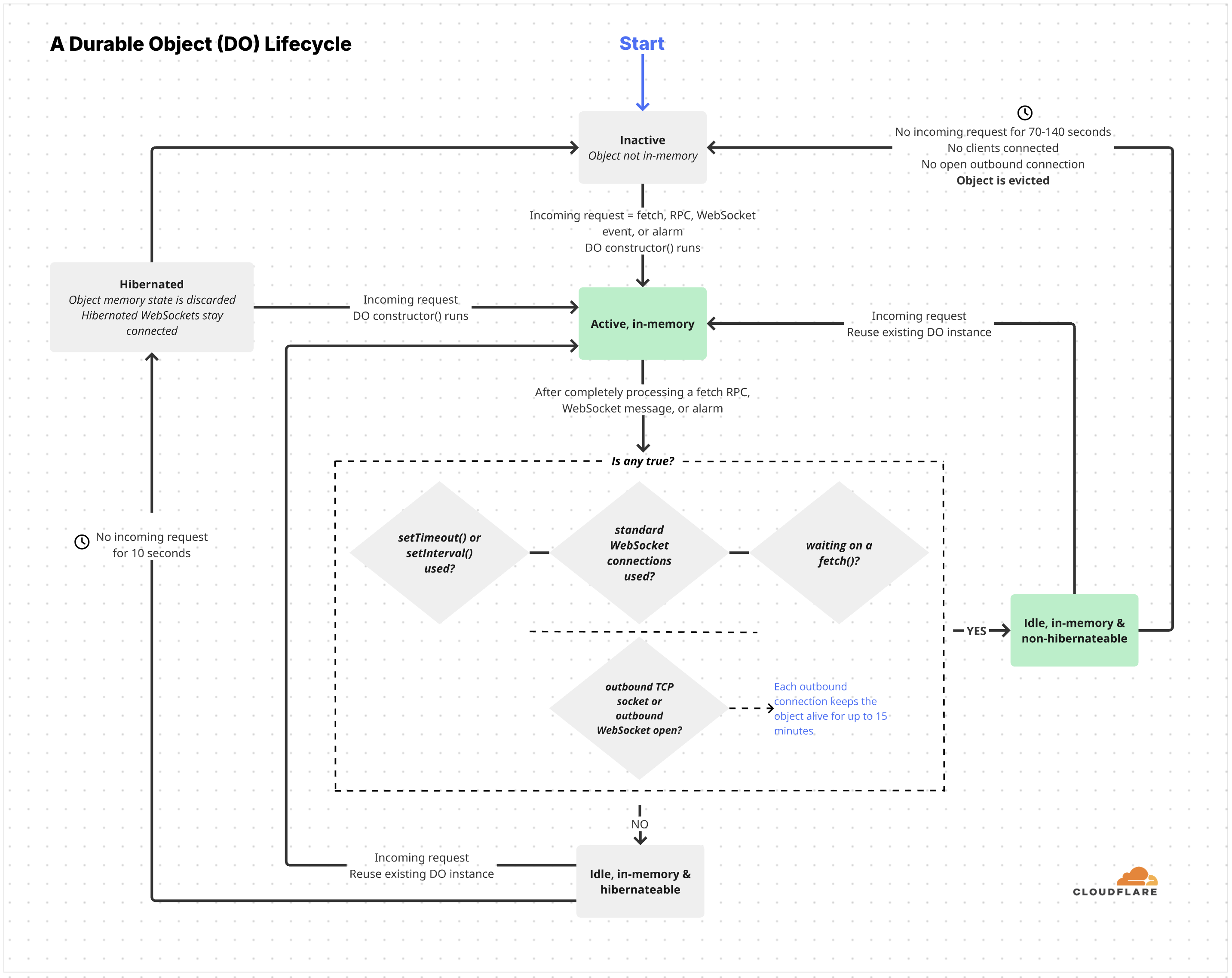
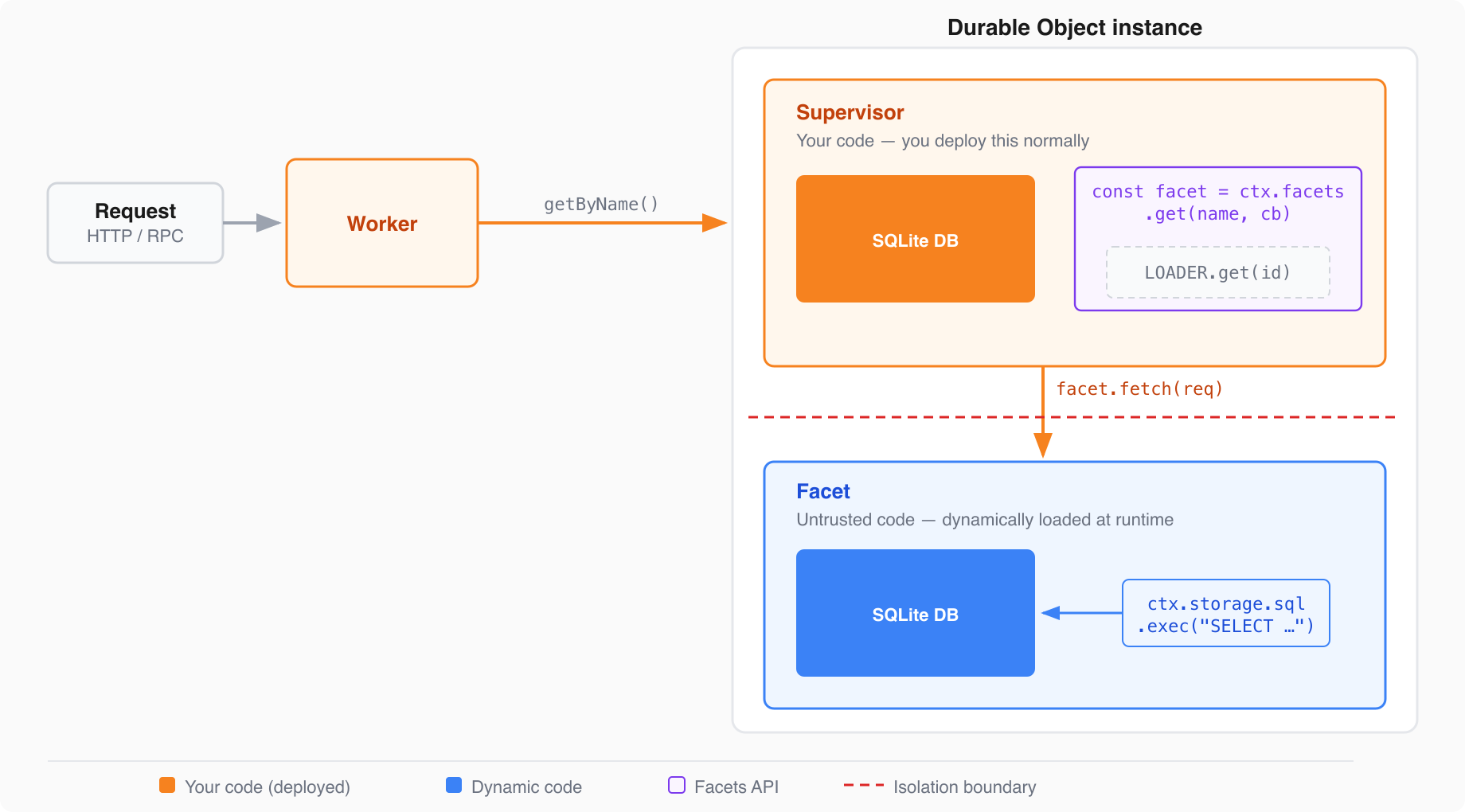
The README says every workspace is its own Durable Object, every Gadget runs in a Dynamic Worker Facet, and Gatekeepers install facets into each workspace. Facets are Cloudflare’s primitive for running dynamically loaded code with its own isolated storage inside a supervising Durable Object. On the approval side, the toolkit binds each action set to one resource’s journal, and that journal is written to Durable Object storage rather than kept in the agent’s context.
The other half is that someone has to write the simulation for each API. The Notion Gatekeeper’s header says its reads overlay pending actions “so a Gadget sees its own writes immediately”, and notes that list simulation has documented limitations. Home Assistant ships a 399-line simulation.ts. Google ships a 380-line gmail-overlay.ts plus separate Gmail and Chat state files. GitHub overlays simulated pull-request heads. This is per-service engineering, and it is the reason the approve-later experience exists at all.
Three write paths opt out, and MCP is one of them
I searched packages/ at the pinned commit for the literal awaitDecision: true, excluding __tests__ directories and *.test.* files. It appears on exactly five lines:
| Location | What it is |
|---|---|
gatekeeper-supabase/src/supabase.ts:952 | Mutating SQL |
gatekeeper-zoominfo/src/zoominfo.ts:1121 | Paid contact/company enrichment |
mcp-shared/src/session.ts:225 | Every non-read MCP tool call (both MCP Gatekeepers) |
gatekeeper-kit/src/actions.ts:732 | The kit’s mapping from delivery: "await-decision" |
integration-tests/.../test-gatekeeper.ts:579 | A test fixture |
Under packages/, the string "await-decision" itself appears only in the kit’s source and tests, so the three production opt-outs are the first three rows. Each says why in a comment. Supabase: “This gatekeeper doesn’t simulate writes, so the agent shouldn’t continue (and read back un-applied state)”. ZoomInfo: “No simulation: suspend the agent until the user decides”. And the shared MCP session:
1
2
3
4
5
6
// packages/mcp-shared/src/session.ts @ 5cae880e (lines 221-225)
// MCP describes no inverse operation for a tool call.
implementsRevert: false,
// Nothing about a queued call is simulated, so later reads would show a world in which it
// never happened. Wait for the decision instead.
awaitDecision: true,
The reasoning is sound. MCP gives a client no way to predict what a tool call will do, so there is nothing to replay. The MCP Gatekeeper’s README says the same thing under “Notes and current limitations”: no simulation, the agent’s turn suspends until the user decides, no revert, and no scoping below tool names. The MCP Server Portals Gatekeeper says those limitations apply there too.
What changes for the user is what happens to the agent. The shared Gatekeeper interface calls awaitDecision “an advisory hint, not an enforcement mechanism” and says Gatekeepers that fully simulate their actions should leave it unset “so the agent keeps working seamlessly.” The overseer is where the hint takes effect. Only agent turns suspend on awaitDecision, and only when a manual decision is pending; auto-approved actions keep running. The agent loop latches the flag when the model step that submitted the action finishes, then ends the turn and waits. A suspended turn resumes only after every awaited action in that turn is approved, and the source is blunt about the other case: “Denial leaves the turn ended.”
A Gadget calling the same MCP tool is not suspended. It gets back status: "pending" with an action id, and the message tells an agent running code to “return from this executeCode call now so the approval can appear in chat,” then call getActionResult after approval.
The one MCP claim that skips approval
If a write waits, what runs without asking? In mcp-shared/src/tools.ts, a tool is classified as a read when, and only when, the server’s annotation says readOnlyHint === true. A read runs immediately and is recorded as an observation. Everything else, including every unannotated tool, is queued.
The file is explicit about the trade-off. readOnlyHint “is honoured on both tiers”, and “a tool the server mislabels runs with no approval, where an unlabelled one would have been queued.” The two tiers are byo, which the user-supplied MCP Gatekeeper hard-codes, and vetted, which the MCP Server Portals Gatekeeper uses only when MCP_PORTAL_TRUST_ANNOTATIONS is set to true. A write can become eligible for auto-approval only on vetted, and only when the tool also declares destructiveHint: false and idempotentHint: true.
The MCP specification is clear on the default posture: “clients MUST consider tool annotations to be untrusted unless they come from trusted servers.” Cloudflare OS knows this. The MCP Gatekeeper README calls honouring readOnlyHint on user-supplied endpoints “a knowing departure from that rule”, says a server that labels a destructive tool readOnlyHint: true “gets that tool run without a prompt”, and argues that refusing the hint would mean an approval prompt for every search and list. The connect form tells the user the same thing before they paste a URL. The project’s own unit test asserts it: honours readOnlyHint on any endpoint.
Rerun: the unmodified classifier on five synthetic tools
To check the behavior rather than the comments, I copied tools.ts from the pinned commit unchanged (SHA-256 9f524462…, identical to the clone), stubbed the three runtime imports that classifyTool never calls, and ran it under Node v26.5.0 against a synthetic catalog on both trust tiers:
| Tool (annotations) | byo mode | byo auto-approval eligible | vetted mode | vetted auto-approval eligible |
|---|---|---|---|---|
delete_repository (readOnlyHint: true) | read | no | read | no |
list_issues (readOnlyHint: true) | read | no | read | no |
create_issue (none) | action | no | action | no |
update_label (destructiveHint: false, idempotentHint: true) | action | no | action | yes |
string_hint (readOnlyHint: "true" as a string) | action | no | action | no |
The classifier does what its comments say. The strict === true checks fail closed on sloppy annotations, so the string "true" does not count. A write becomes eligible for auto-approval only with the deployment’s vote, not just the server’s. Eligibility is not approval: the backend’s autoApprovalRule also requires that the user has enabled an auto-approve rule for that action kind on that Gatekeeper and that the workspace has not latched restricted-data mode, and the drain applies pending actions in order within each Gatekeeper, so an earlier manual gate on that same Gatekeeper holds later eligible actions. And a destructive tool that its server labels read-only is a read on both tiers, with classifiedBy: "server-annotation" recorded so an audit can find it later.
The project’s test also states its threat model: acting on a false read-only claim “only skips a prompt for a call the server would have answered anyway.” That is right for a malicious server, which can misbehave on any call, approved or not. In my reading, it is weaker for an honest server with a wrong label. That is a bug, not an attack, and an approval prompt would at least give a person a chance to catch it. This is my inference about the risk model, not something the source says.
Pick the approval lane before you pick the integration
The README describes one approval experience. The source implements three. How the service was integrated decides whether a write can be simulated and whether it is even eligible for auto-approval; deployment trust, the user’s auto-approve rules, and the pending queue then decide whether an eligible write actually pauses.
| Lane | Who gets it at 5cae880e | Agent experience | What protects you |
|---|---|---|---|
| Simulated write | Native Gatekeepers with hand-built overlays (GitHub, Google, Notion, Home Assistant, and others) | Keeps working; reads reflect pending changes | Later approve or reject, journal, provisional-id refusal |
awaitDecision write | Every non-read MCP tool call, Supabase mutating SQL, ZoomInfo enrichment | Turn pauses while a manual decision is pending; a denial ends it. Auto-approved actions do not pause | The approval prompt, or an auto-approve rule you enabled |
| Read on the server’s word | MCP tools labelled readOnlyHint: true | Runs immediately, logged as an observation | Only the accuracy of the server’s annotation |
That table turns into a short integration checklist.
- If approve-later is why you chose Cloudflare OS, budget for native Gatekeepers. A service behind MCP gets the synchronous approval pattern the README criticizes whenever a human has to decide. The approve-later behavior comes from simulation code someone writes per API, as the Notion, Google, Home Assistant, and GitHub Gatekeepers show.
- Treat
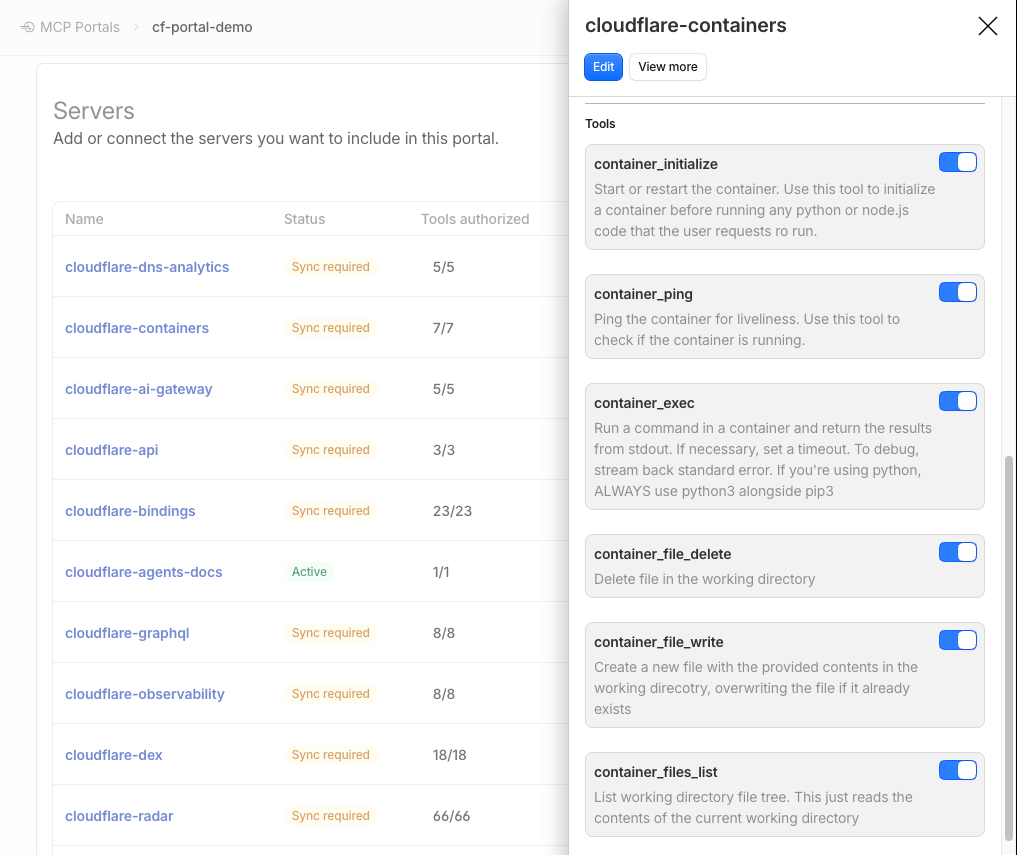
readOnlyHintas a permission grant, not metadata. Before connecting an MCP server, list its tools and check every one labelled read-only. A wrong label moves a write from lane 2 to lane 3. - Use the portal to remove tools, not just to route them. Cloudflare OS’s MCP Gatekeepers cannot scope a grant below tool names, so tool lists and the portal’s per-tool toggles are the narrowest controls they offer. Turn off tools like file deletion if no Gadget needs them.
- Leave
MCP_PORTAL_TRUST_ANNOTATIONSoff unless you control the upstream servers. It is the only switch that lets an MCP server’s own hints make its writes eligible for auto-approval, which a user rule can then act on. - Expect agent runs to pause on MCP writes. A task that issues an MCP write needing a manual decision stops after that model step, and a single denial ends the turn rather than skipping that step.
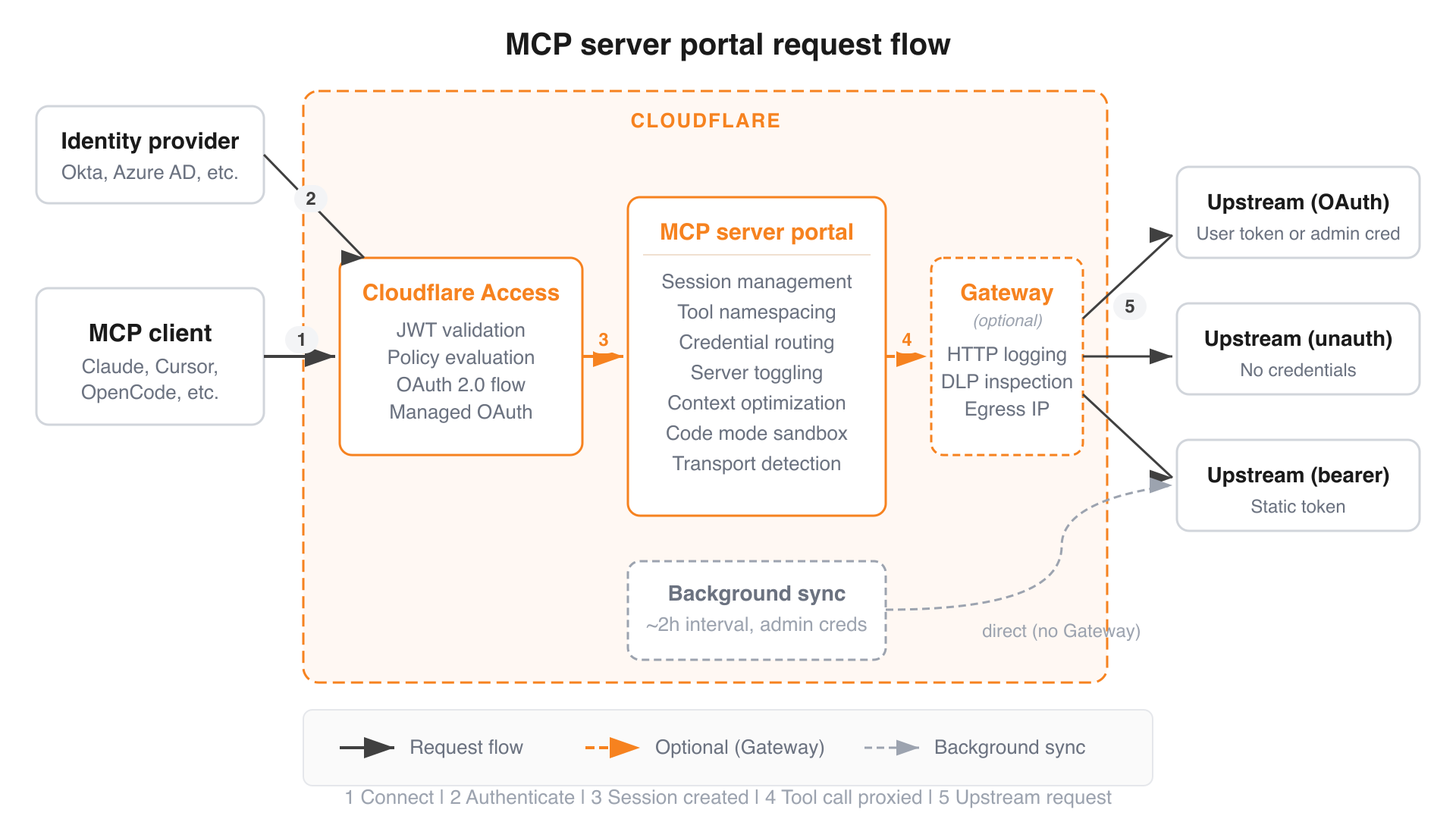
This connects to two earlier audits. In OpenHarness, the order of permission checks decided what an operator’s deny rules meant. Here, the integration path decides what “requires approval” means. If you are comparing agent gateways, read the OpenConnector audit next: it is another credential gateway for agents, where anonymous proxy calls outrank scoped tokens under the shipped defaults, and it is the next check once you know which approval lane a call takes.
Limitations of this audit
- I did not deploy Cloudflare OS, connect a real MCP server, or watch an agent turn suspend. The suspension and resume behavior is read from
overseer.ts, not observed. - My rerun exercises the classifier only. It does not run the Gatekeeper Worker, the approval queue, or an MCP server.
- The five-line census is a text search at one commit. A Gatekeeper could set the flag without that literal, and later commits may change these findings.
- This is not a vulnerability report. The project documents the MCP limitations and the
readOnlyHinttrade-off in its package READMEs, connect form, and tests. The gap is between the top-level README’s single description of simulation, on line 77 with no exceptions named, and where those exceptions are written down.
Key Takeaways
| Insight | Implication | Next step |
|---|---|---|
| Simulation is per-Gatekeeper code, not a platform default | The approve-later experience depends on how each service is integrated | Map each service you plan to connect to a lane before rollout |
Every non-read MCP call sets awaitDecision: true | Agents pause on MCP writes needing a manual decision, and a denial ends the turn | Plan MCP-heavy workflows around synchronous approval |
readOnlyHint: true skips approval on both trust tiers | A mislabelled destructive tool runs without a prompt | Review read-only labels and turn off unneeded tools in the portal |
| Write auto-approval needs a vetted portal, two hints, and a user rule | Servers cannot auto-approve their own writes by default | Keep MCP_PORTAL_TRUST_ANNOTATIONS off for servers you do not control |
New Questions
- Could a portal or Gatekeeper attach approval policy to specific tools, so that a read-only label from an untrusted server still prompts the first time?
- Would a generic “dry-run” convention in MCP, even a voluntary one, let a client simulate common write tools instead of suspending the turn?
- How often do real MCP servers label tools read-only incorrectly? A survey of public server manifests against their implementations would answer that.
- When one action in a suspended turn is denied, should the turn end, or should the agent get the denial and replan?
References
Code & Implementation (pinned at 5cae880e):
- cloudflare/cloudflare-os repository
- README.md
- gatekeeper-kit/src/actions.ts
- gatekeeper-kit/src/simulation.ts
- gatekeeper-kit/src/action-journal.ts
- mcp-shared/src/session.ts
- mcp-shared/src/tools.ts
- mcp-shared/tests/tools.test.ts
- workshop-backend/src/overseer.ts
- workshop-shared/src/gatekeeper.ts
- gatekeeper-mcp/src/mcp.ts
- gatekeeper-mcp-portal/src/config.ts
- gatekeeper-supabase/src/supabase.ts
- gatekeeper-zoominfo/src/zoominfo.ts
- gatekeeper-notion/src/notion.ts
Documentation:
- MCP Gatekeeper README
- MCP Server Portals Gatekeeper README
- Supabase Gatekeeper README
- MCP specification 2026-07-28: Tools
- MCP specification 2026-07-28: Schema reference
- Cloudflare docs: MCP server portals
- Cloudflare docs: Durable Object lifecycle
- Cloudflare docs: Durable Object facets
Announcements:
Related on this site:
Editorial method: claims in this article point to primary documentation, pinned source code, runnable checks, or dated measurements, with AI-assisted research under the site's evidence-gated policy. How this site verifies claims and discloses AI assistance · Report a correction.
Working on something like this?
I take a small number of paid, scoped reviews: AI agent/RAG architecture diagnosis, Unity CI & build-automation audits, and multimodal QA design review. Each one ends in a written findings document.
Work with me